Friday, January 22, 2016

The Heroes of Telemark (1965)


The Heroes of Telemark is a Hollywood movie from 1965 that was released on DVD in 2008. While the movie is based on a true story, historical truth is violated many times. Much of what we see in this film is a product of the director’s vivid imagination. Here are some basic facts about it:

** Directed by Anthony Mann (1906-1967)
** Written by Ivan Moffat and Ben Barzman
** Run time: 125 minutes

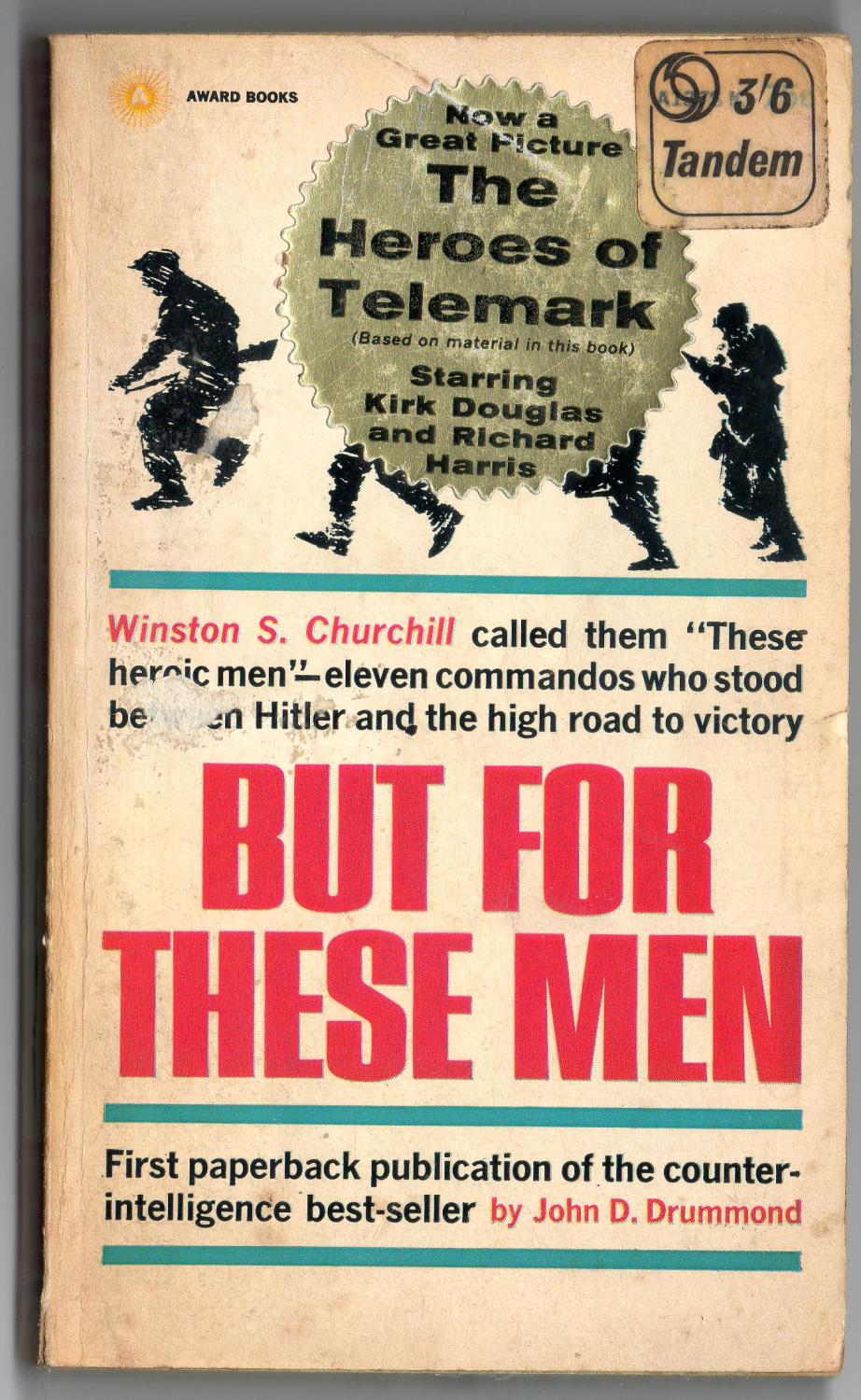
The cast includes Kirk Douglas, Richard Harris, and Ulla Jacobsen. The screenplay is based on two books: Skis against the Atom by Knut Haukelid (1954, 1989) and But for These Men by John Drummond (1962, 1965).

The story takes place during World War Two when German scientists were trying to develop atomic power. In order to do this, they needed heavy water, which was produced at a factory at Vemork in German-occupied Norway. The title of the film refers to a small group of Norwegian resistance fighters, who carried out an attack on the heavy water factory in February 1943 and an attack on the ferry that was transporting barrels of heavy water across Lake Tinn in February 1944.

These acts of sabotage crushed the German government’s hope of developing atomic power. Today they are regarded as some of the most important acts of sabotage that were carried out during the war.

The Heroes of Telemark is dramatic and gripping from the beginning to the end. If you look at it as just another action movie, you may like it and give it high marks. But if you remember that it is based on a true story, I think you will be more critical, because the director plays fast and loose with the historical facts.

There are many problems with this film:

# 1. The first problem is the question of language. The film is dedicated to the Norwegian people because of their brave resistance against the German occupation, but where are the Norwegians?

The two leading male characters are from the US, while the leading female character is from Sweden, and they all speak English! The Norwegians speak English to each other; the Germans speak English with each other, usually with a heavy German accent to remind us about their nationality.

There are a few cases where a German officer gives an order in German, but once the order is given, he will switch back to English. The decision to have all actors speak English is most unfortunate, because the historical credibility of the film is reduced to zero. This is not realistic.

# 2. The second problem is the question of age. Kirk Douglas was born in 1916. In 1965 he was 49. He is much too old for this role. Richard Harris was born in 1930. In 1965 he was 35. While he is younger than Douglas, he is still too old for this role. The members of the Norwegian group who carried out these attacks were young men in their twenties.

# 3. The third problem concerns the leading characters. Richard Harris plays a character who is loosely based on Knut Haukelid, who was a member of the resistance group, and author of one of the two books which inspired the film. Haukelid (who was born in 1911) was 32 in 1943. Harris was 35 when he played the role. This is acceptable. Things are different when we look at the other leading character. 

Kirk Douglas plays a professor from the University of Oslo. No professor from Oslo was a member of the resistance group. Douglas is supposed to be a hero, but it is difficult to like him, because he is not a very sympathetic person (when you watch the film, you will understand what I mean when I say this).

# 4. The fourth problem concerns historical truth which is violated several times. Here are a few examples:

(a) When the saboteurs leave the factory after the attack, one of them is shot and killed by the Germans. This is not true. One amazing fact is that all members of the Norwegian group survived not only the attacks but also the war

(b) The German forces pursuing the saboteurs on skis are assisted by a Norwegian traitor. This is not true. No Norwegian traitor was involved here

(c) Having placed two bombs on the ferry that will transport barrels of heavy water across a lake, Kirk Douglas decides at the last minute to board the ferry. This detail is not true. No saboteur was on the ferry when the bombs exploded.

For reasons of space I will not mention more examples.

I do not understand why so many Hollywood directors feel they have to “improve” the true facts when they direct a movie that is based on a true story. The true story is already dramatic. There is no need to exaggerate or invent something that never happened. The true story is so dramatic that it is hard to believe.  Why not stick to the facts? They are dramatic and they have the advantage that they are true.

While historical truth is violated several times, there is one significant aspect of the film which is true: it was shot on the right location. When we see the heavy water factory, it is the real factory (Norsk Hydro) in Vemork. When we see the resistance fighters skiing, they are skiing in the mountains near Vemork. When we see the ferry sailing on the lake, it is sailing on Lake Tinn, the real lake.

CONCLUSION
As stated above, The Heroes of Telemark can be regarded as just another action movie. If you take this approach, you will probably like it, because it is a fascinating story.

Unfortunately, I cannot take this approach, because I cannot forget that historical truth is violated many times. When I consider this element, I end up with a rather critical view of the film.

It is a fascinating story, which deserves to be told, but this film plays fast and loose with the historical facts. Therefore I think it deserves a rating of three stars.

PS # 1. In 1948, a French-Norwegian film about the case was produced. Translated into English, the title of this film is The Battle for Heavy Water. One interesting fact about this film is that many of the roles are played by Norwegian saboteurs, who play themselves. As far as I know, this old film has never been released on DVD. It is available on YouTube.

PS # 2. In 2003, BBC aired a three-part documentary film about the case that was produced and narrated by Ray Mears. The title is The Real Heroes of Telemark. With a small group of experts, Mears re-enacted many parts of the operation that the saboteurs carried out during the war. According to Mears, the survival skills of the Norwegian saboteurs are an important aspect of the story. Mears has also written a book about the case, which has the same title as the film: The Real Heroes of Telemark (2003, 2004).

PS # 3. In 2015, a six-part drama produced by Norwegian television was aired. The title is The Heavy Water War. In the UK, the miniseries is known as The Saboteurs. In this version several languages are spoken, which makes it more realistic than the Hollywood movie from 1965. However, one flaw is found in both of them: the Hollywood movie introduces a fictional female character played by Ulla Jacobsen (1929-1982). The Norwegian miniseries does exactly the same when it introduces a fictional female character played by Anna Friel.

PS # 4. For more information, see Heavy Water and the Wartime Race for Nuclear Energy by Per F. Dahl (1999).

PS # 5. Hitler’s Sunken Secret is a documentary film about the sabotage of the ferry that was used by the German Army to transport barrels of heavy water across Lake Tinn in 1944. It is an episode in the long-running program NOVA which is devoted to the history of science (season 33, episode 5, first aired on US television - PBS - in November 2005).

PS # 6. The following articles about the Norwegian saboteur Joachim Rønneberg (born 1919) are available online:

** Gordon Corera, “Last hero of Telemark: The man who helped stop Hitler’s A-bomb,” BBC News, 25 April 2013

** Andrew Higgins, “WWII Hero Credits Luck and Chance in Foiling Hitler’s Nuclear Ambitions,” New York Times, 20 November 2015

***
Image result for the heroes of telemark poster
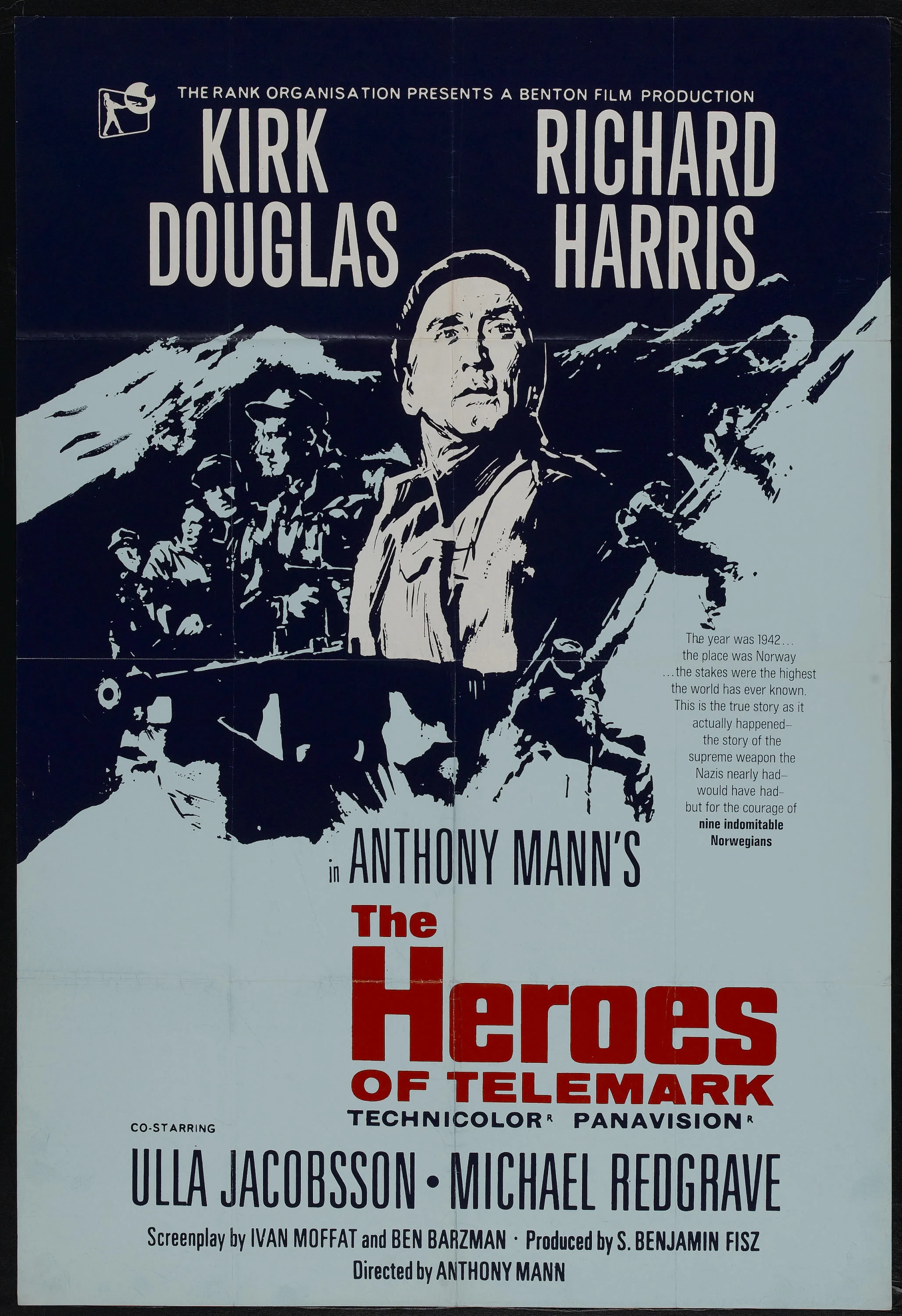
A poster from the 1965 film with Kirk Douglas in the foreground. 
***
 Image result for the heroes of telemark poster
The cover of Knut Haukelid's book from 1954.
The book was reprinted in 1989.

***
 
 
The cover of John Drummond's book from 1965.

***


Thursday, January 21, 2016

Hitler's Sunken Secret (2005)


Nova: Hitler's Sunken Secret [DVD] [2005] [Region 1] [US Import] [NTSC]


Hitler’s Sunken Secret is a documentary film that was first shown on US television (PBS) in November 2005. It is an episode in the long-running program NOVA, which is devoted to the history of science (season 33, episode 5). Here is some basic information about it:

** Directed by Duncan Copp
** Narrated by Neil Ross
** Run time: 53 minutes

Hitler’s Sunken Secret is a film about an important chapter in the history of World War Two. German scientists were trying to develop a nuclear bomb. In order to do this, they needed heavy water, which was produced at a factory (Norsk Hydro) at Vemork in German-occupied Norway. A small group of Norwegian resistance fighters carried out an attack on the factory in February 1943 and an attack on the ferry (SF Hydro) that was transporting barrels of heavy water across Lake Tinn in February 1944.
 
These acts of sabotage crushed the German government’s hope of developing a nuclear bomb. Today they are regarded as some of the most important acts of sabotage that were carried out during the war.
 
This film focuses on the attack on the ferry that took place in February 1944. Before the attack, Norwegian resistance fighters had warned the British authorities that it might cause the death of some civilians. They were told to go ahead in spite of this concern, because the mission was considered to be very important. The mission was accomplished. The bomb exploded and the ferry sank to the bottom of the lake.

Afterwards there were doubts. Had it been too easy? Did the barrels in the railway carriages really contain the precious heavy water or was it just a decoy operation? In this film we follow a team of experts who try to find the answer to these questions.
 
A special device is lowered to the bottom of the lake which is 400 meters deep. With this device the team can locate the wreck of the ferry and find some of the drums that were loaded on it. One of them is recovered. It is still intact. The contents must be tested. Is it just plain water or is it really heavy water? The answer: it is heavy water.

However, we also learn that this shipment of heavy water was not enough for the German efforts to build a nuclear bomb. Even if this shipment had been delivered to the German scientists who were working on the project, it would not have been enough for them. With the benefit of hindsight we can see that the Germans were far behind the Americans in the global race to build a nuclear bomb, but nobody knew that at the time and nobody could know that until Germany had been defeated in 1945.

Several witnesses were interviewed for the film. Here are the names:

** Per F. Dahl (1932-2011), physicist, retired, Brookhaven National Laboratory; author of Heavy Water and the Wartime Race for Nuclear Energy (1999)

** Knut Lier Hansen (1916-2008), Norwegian saboteur, member of the team that sabotaged the ferry in February 1944

** Halvard Asskildt, Hydro survivor

** Solveig Asskildt, Hydro survivor

** Brett Phaneuf, Pro Mare

** Fredrik Soreide, Pro Mare

** Dave Wark, Imperial College, London

** Mark Walker, Union College

** Carl Friedrich von Weizsäcker (1912-2007), German scientist, who worked on the top secret nuclear project (this interview was recorded in 1992)

As you can see from the above, some of the witnesses have passed away since this film was made. It is a good thing that their memories and testimonies are preserved in this film.

Vermork in 1930

Norsk Hydro: the Vemork heavy water plant as it looked in 1930. When the sabotage action took place in February 1943, the whole valley was covered in snow.
 
Hitler’s Sunken Secret is an interesting film about an important chapter in the history of World War two.

If you are interested in the history of the modern world – in particular the history of nuclear power and nuclear bombs – this film is something for you.

PS # 1. In 1948, three years after the war ended, a French-Norwegian film about the case was produced. Translated into English, the title of this film is The Battle for Heavy Water. One interesting fact about this film is that many of the roles are played by Norwegian saboteurs, who play themselves. As far as I know, this old film has never been released on DVD. It is available on YouTube.

PS # 2. The Heroes of Telemark is a Hollywood movie from 1965 about the heavy water war (starring Kirk Douglas). Historical truth is violated many times in this film, but one important aspect of the film is true: it was shot in the right location: Telemark, Norway.

PS # 3. In 2003, the BBC aired a three-part documentary film about the case that was produced and narrated by Ray Mears. The title is The Real Heroes of Telemark. With a small group of experts, Mears re-enacted many parts of the operation that the saboteurs carried out during the war. According to Mears, the survival skills of the Norwegian saboteurs are an important aspect of the story. Mears has also written a book about the case, which has the same title as the film: The Real Heroes of Telemark (2003, 2004).

PS # 4. In 2015, a six-part drama produced by Norwegian television was aired and later released on DVD. The title is The Heavy Water War. In the UK, the mini-series is known as The Saboteurs. In this version several languages are spoken, which makes it more authentic and realistic than the Hollywood movie from 1965 where all characters speak English. However, one flaw is found in both of them: the Hollywood movie introduces a fictional female character played by the Swedish actress Ulla Jacobsen. The Norwegian miniseries from 2015 does exactly the same when it introduces a fictional female character played by the British actress Anna Friel.

PS # 5. Joachim Rønneberg (1919-2018) was the leader of the Norwegian team that sabotaged the factory in February 1943. The following articles about his role are available online:

** Gordon Corera, “Last hero of Telemark: The man who helped stop Hitler’s A-bomb,” BBC News, 25 April 2013

** Andrew Higgins, “WWII Hero Credits Luck and Chance in Foiling Hitler’s Nuclear Ambitions,” New York Times, 20 November 2015

***
 
Group photo
Surrounding their boss Leif Tronstad (front row, center) are most of the Vemork saboteurs, including (front row left to right) Jens-Anton Poulsson and Joachim Rønneberg, and (back row left to right) Hans Storhaug, Fredrik Kayser, Kasper Idland, Claus Helberg, and Birger Strømsheim.
 
***


Wednesday, January 20, 2016

The Saboteurs (2015)


The Saboteurs [DVD]


Heavy Water War – known in the UK as The Saboteurs – is a six-part drama based on a true story that was aired on television in several countries and released on DVD in 2015. Here is some basic information about it:

** Produced by Norwegian Television (NRK)

** Directed by Per-Olav Sørensen

** Written by Petter Rosenlund

** Run time: 6 x 45 minutes

The story takes place shortly before and during World War Two. German scientists were trying to develop a nuclear bomb. In order to do this, they needed heavy water, which was produced at a factory (Norsk Hydro) at Vemork in Norway, which was occupied by Germany in April 1940. A small group of Norwegian resistance fighters carried out an attack on the factory in February 1943 and an attack on the ferry (SF Hydro) that was transporting barrels of heavy water across Lake Tinn in February 1944.

These acts of sabotage crushed the German government’s hope of developing a nuclear bomb. Today they are regarded as some of the most important acts of sabotage that were carried out during the war.

Events are seen from four different angles:

# 1. The allies, the UK and the US
# 2. The Norwegian resistance movement
# 3. The private company Norsk Hydro
# 4. The German side

The cast includes the following:

** Dennis Storhøi as Bjørn Henriksen, director of Norsk Hydro (a fictional character)
** Maibritt Saerens as Ellen Henriksen, his wife (a fictional character)
** Christoph Bach as Werner Heisenberg (1901-1976), a German scientist who worked on the top secret nuclear project
** Peri Baumeister as Elizabeth Heisenberg, his wife
** Søren Pilmark as Niels Bohr (1885-1962), a Danish scientist
** Esben Klouman Høiner as Leif Tronstad (1903-1945), a Norwegian scientist and a member of the resistance movement
** Anna Friel as Julie Smith, a captain in the British Army (a fictional character)

PART ONE
Four Norwegian resistance fighters are sent to Norway in October 1942. They land by parachute in the mountains of Telemark, not far from Vemork. The codename is Operation Grouse (later known as Swallow). The members are Jens-Anton Poulsson, Arne Kjelstrup, Knut Haugland, and Claus Helberg.

Their mission is to prepare the ground for a large team of about British soldiers that will land with gliders. The codename is Operation Freshman. Their mission is to attack the factory in Vemork. Operation Freshman begins in November 1942. It is a horrible failure: some members are killed while trying to land, while survivors are caught and killed by the Germans.

The members of Grouse are told to wait in the mountains of Telemark. This is easier said than done. It is in the middle of winter. How can they find anything to eat while they sit and wait for several months?

Six men are chosen to work with Grouse. They are sent to Norway in February 1943. They land by parachute in the mountains of Telemark. The codename is Operation Gunnerside. The members are Joachim Rønneberg, Knut Haukelid, Fredrik Kayser, Kasper Idland, Hans Storhaug and Birger Strømsheim.

Working together, Grouse and Gunnerside attack the factory in February 1943. Amazingly, they manage to slip inside the factory, place the explosives, detonate them and get away without firing a single shot and without losing a single man.

What is the secret? The members of the two teams have been trained and briefed by Leif Tronstad, who used to work for Norsk Hydro. He was there when the factory was being built before World War Two. He knows every detail of the plant by heart. Having escaped from Norway to England, he now works in Scotland where the resistance fighters are trained and briefed before being sent back to Norway.

The attack is a success, but the production of heavy water is not stopped, merely delayed. The Germans order the company to rebuild everything and after a few months production is up and running again.

This is why the US military wants to bomb the valley. Tronstad tries to explain that the factory cannot be bombed. A raid will only cause civilian casualties and not stop the production of heavy water. The Americans ignore his warning and go ahead with their plan. The valley is bombed in November 1943. When the raid is over, the results are just as Tronstad had predicted: the factory is hardly damaged, and there are many civilian casualties.

Because of the Norwegian sabotage in February 1943 and the US air raid in November 1943, the Germans feel that production is no longer safe. They decide to move the production to Germany. The heavy water produced so far is to be shipped to Germany. The transport will be done by train. The railway cars will be rolled on a ferry that will sail them across Lake Tinn.

This is where the Norwegian resistance has a chance to stop the shipment. A bomb is placed on the ferry. When it explodes, the ferry sinks to the bottom of the lake. The lake is so deep that the Germans cannot recover the barrels with heavy water.

PART TWO
In this film we follow the development of the case step by step:

** In episode 1 the scene is set. We meet all the significant characters of the drama.

** In episode 2 Tronstad is in Scotland, while Heisenberg and Bohr meet in Copenhagen. Operation Grouse begins. Operation Freshman fails.

** In episode 3 the members of Operation Gunnerside are chosen. Because of bad weather conditions they cannot be sent to Norway as soon as they are ready. They must wait for a while.

** In episode 4 Operation Gunnerside is carried out.

** In episode 5 the factory is bombed by US planes.

** In episode 6 the ferry is attacked by Norwegian saboteurs. In Germany, Heisenberg wonders if he can survive the end of the war. Leif Tronstad is sent to Norway as part of Operation Sunshine. He is killed shortly before the end of the war.

PART THREE
Several languages are spoken in this film. It is good to see Germans speaking German to each other and Norwegians speaking Norwegian to each other. Obviously, British and American characters speak English to each other. When Heisenberg and Niels Bohr meet, they speak English, which is credible. When the Norwegians talk to the British and Americans in the UK, they speak English, which is also credible.

Subtitles are used to cover any language that is not English. When English is spoken, there are no subtitles, which may be a problem for those who are hard of hearing. Letting each character speak his or her own language is one element which raises the authenticity of this drama.

In most cases, the drama follows the historical facts, and most characters are real historical persons, but there are some significant exceptions. As you can see from the list above, several characters are fictional. The director of Norsk Hydro and his wife are fictional. Perhaps this is done in order to protect the real directors of the company, who worked closely with the Germans.

Ellen Henriksen is played by Maibritt Saerens, who is a Danish actress, and she speaks Danish. This is very strange. Why must the fictional director of a Norwegian factory have a fictional wife who is from Denmark? The director and his wife have a prominent place in the drama. We see them all the time, but they are fictional. This does not increase historical credibility.

Another fictional character is Julie Smith, who is a captain in the British Army. She too has a prominent place in the drama. We see her all the time, but she is fictional. Again, this does not increase historical accuracy.

Most actors play their roles quite well, but one obvious exception is Maibritt Saerens, who seems totally out of place. Her performance is not convincing at all. I do not understand why she was chosen for this role. If director Henriksen must have a wife, why not use a Norwegian actress?

CONCLUSION
The Saboteurs got some good reviews. I can understand this. The people behind the drama want us to see how the war affected everyone, no matter what their position or place in society was. They succeed quite well. This drama is not only about military and technical history, it is also about social and economic history. Moral questions are raised and discussed several times, which is a good thing.

When we start watching episode 1, we know how the story will end, but still the producers manage to make it interesting and to capture our attention. In general this drama is well done; in general historical accuracy is high. I like this drama. I would like to give it five stars, but it is not entirely successful. I cannot forget the flaws I have mentioned above. I have to remove one star because of them. Therefore I think it deserves a rating of four stars.

PS # 1. In 1948, three years after the war ended, a French-Norwegian film about the case was produced. Translated into English, the title of this film is The Battle for Heavy Water. One interesting fact about this film is that many of the roles are played by Norwegian saboteurs, who play themselves. As far as I know, this old film has never been released on DVD. It is available on YouTube.

PS # 2. The Heroes of Telemark is a Hollywood movie from 1965 about the heavy water war (starring Kirk Douglas). Historical truth is violated many times in this film, but one important aspect of the film is true: it was shot in the right location: Telemark, Norway.

PS # 3. In 2003, the BBC aired a three-part documentary film about the case that was produced and narrated by Ray Mears. The title is The Real Heroes of Telemark. With a small group of experts, Mears re-enacted many parts of the operation that the saboteurs carried out during the war. According to Mears, the survival skills of the Norwegian saboteurs are an important aspect of the story. Mears has also written a book about the case, which has the same title as the film: The Real Heroes of Telemark (2003, 2004).

PS # 4. For more information about this topic, see the book Heavy Water and the Wartime Race for Nuclear Energy by Per F. Dahl (1999).

PS # 5. Hitler's Sunken Secret is a documentary film about the sabotage of the ferry that was used by the German Army to transport barrels of heavy water across Lake Tinn in February 1944. It is an episode in the long-running program NOVA, which is devoted to the history of science (season 33, episode 5, first shown on US television - PBS - in November 2005).

PS # 6. Joachim Rønneberg (born 1919) was the leader of the Norwegian team that sabotaged the factory in February 1943. The following articles about his role are available online:

** Gordon Corera, “Last hero of Telemark: The man who helped stop Hitler’s A-bomb,” BBC News, 25 April 2013


** Andrew Higgins, “WWII Hero Credits Luck and Chance in Foiling Hitler’s Nuclear Ambitions,” New York Times, 20 November 2015

*****

Saturday, December 26, 2015

Churchill's Bodyguard (2005, 2009)


http://ecx.images-amazon.com/images/I/91EczzOKRmL._SL1500_.jpg


Churchill’s Bodyguard is a documentary film (in 13 episodes) that was shown on television in 2005 and released on DVD in 2009. Each episode runs for ca. 46 minutes. The total running time is almost 600 minutes, i.e. ten hours. Here are some basic facts about it:

** Produced for the BBC and UK-TV-History
** Directed by Jonathan Martin and Philip Nugus
** Written by Jonathan Martin
** Narrated by Robert Powell


Walter H. Thompson (1890-1978) was Churchill’s bodyguard during two long periods: the first 1921-1932; the second 1939-1945; the total span was almost 18 years. At the end of World War Two, Thompson completed a detailed manuscript about his experience, but for reasons of security he was not allowed to publish it. A short, censored version appeared in 1951 under the title I Was Churchill’s Shadow.

An authorized biography written by Tom Hickman was published in 2005. It has the same title as the film: Churchill’s Bodyguard. Both the biography and the film are based on Thompson’s complete memoirs that were discovered in an attic several years after his death.

Excerpts from Walter Thompson’s memoirs are read by Dennis Waterman. Most of what we see on the screen is old footage (pictures and film). But not everything is original: some scenes are re-enacted. John Tradewell plays the role of Walter in these scenes. There are two consultants:
 
(1) Linda Stoker, who is Walter’s great-niece
(2) Harold Thompson, who is one of Walter’s sons

Each episode covers one topic. In addition, the thirteen episodes follow a more or less chronological line from 1911 until 1945. Here are the titles of the thirteen episodes:

# 01. Walter meets Winston

# 02. Lawrence and Walter save the day

# 03. Nearly killed in New York

# 04. Indian nationalist assassin

# 05. Nazi sniper plan

# 06. Dangerous travels

# 07. Surviving the blitz

# 08. Attack at the flying boat bock

# 09. Winston’s double

# 10. Suicide attack in Tehran

# 11. The kiss of life?

# 12. The sewer bomb

# 13. Love him to death

PART ONE
Numerous books and documentary films have been written and produced about World War Two. Important topics, events, and persons - such as Churchill and Hitler - have been described, analyzed and interpreted several times. It is not easy to come up with something that is new, something that has not already been done several times over.

This project seems to have a new and interesting angle, because the focus is not on the leader, but on his bodyguard. It sounds good. And it works quite well, because Churchill had the same bodyguard for almost 18 years and because this man wrote a detailed manuscript which the producers could use.


Thompson was literally closer to Churchill than anybody else, while he was his bodyguard. Whenever Churchill went from A to B, Thompson would follow him. Whenever Churchill attended a ceremony or a meeting, Thompson would be there, standing right behind him.

The two men had very different backgrounds and personalities, but soon they came to like and respect each other. It was not always easy for Thompson to protect Churchill, because he did not care much about his safety; he was an adventurous type, who wanted to get as close to the action as possible, while Thompson would try to persuade him to stay back and not take any unnecessary risks.

Based on the complete memoirs of Thompson, this film offers a personal portrait of Churchill. It is not an objective account. It does not pretend to be. It is Thompson’s impression of his boss. Whether we agree with Churchill or not, it is an undeniable fact that he played an important role in the history of the UK, of Europe, and of the world for several decades of the 20th century.

PART TWO
Churchill’s Bodyguard is a fascinating, gripping, and interesting film because of the special angle that is employed here. Having said this, I have to add that it is not perfect in every way. There are some flaws. In the following I will mention the flaws I noticed while watching the film.

# 1. There are many repetitions. Each episode opens with the same introduction which runs for more than 2 minutes. With 13 episodes, the introductions take up more than 26 minutes, almost half an hour.

Some photos and some clips are used over and over again. Some of the clips which are used many times are not even old footage, they are re-enacted: whenever we hear about Thompson and his memoirs, we see a clip of a person who is writing with an old-fashioned fountain pen. Whenever Churchill and Thompson have to get from A to B, we see a clip of two persons who are walking along a footpath.

# 2. The film is a bit heavy on the audio side. The narrator Robert Powell has a lot to say; and when he does not talk, Dennis Waterman takes over, reading excerpts from Thompson’s memoirs. Both of them talk and talk.

# 3. Episode # 2 is about the Cairo Conference of 1921, which re-designed the map of the Middle East. Since Churchill was in charge of this event, it is fair to say that he re-designed the map of the Middle East. Summing up the results, the narrator claims the conference was considered a success. Perhaps it was considered a success back in 1921, although I think it depends on who you are asking. You will get different evaluations from different groups of people.

With the benefit of hindsight we can see that the results of the conference were not exactly a success. A critical evaluation of the conference can be found in the book Winston’s Folly: How Winston Churchill Created Modern Iraq by Christopher Catherwood (2004, 2005).

# 4. The title of episode # 3 is “Nearly Killed in New York.” It is true that Winston was nearly killed during a visit to New York in 1931. But not because there was an attempt on his life. He was in a traffic accident, and he himself was to blame for it. When we see the title of episode # 3, we might think that someone in New York tried to kill him and almost succeeded, but this is not true at all. The title of this episode is misleading.

# 5. The Amritsar massacre of 13 April 1919 is mentioned in episode # 4. Troops under the command of Brigadier-General Reginald Dyer opened fire on unarmed civilians. According to the narrator, the number of people killed was 379. This is the official figure. We can be sure this is a minimum. Most Indian observers offer higher figures. I think the narrator should have said “at least 379 were killed.”

For more information about this event, see The Butcher of Amritsar by Nigel Collett (2005, 2006).

# 6. In several episodes we hear about Churchill’s long distance travels, for instance his journey to Cairo and to Moscow and back again (in 1942). Churchill and his team travelled in an unarmed plane. The journey was long and dangerous, but nothing bad happened to them. One reason for this is that the pilot and his crew were highly qualified.

In the film we do not hear anything about them. You can find more information about the pilot and his crew in a documentary film called Flying the Secret Sky: The Story of the RAF Ferry Command that was shown on US television (PBS) and released on DVD in 2008.

# 7. Episode # 10 is about the Teheran Conference that was held from 28 November to 1 December 1943. In the film we are told that German agents planned to kill the big three – Churchill, Roosevelt, and Stalin – during the conference. The German plan is known as Operation Long Jump.

This claim is controversial. Scholars do not agree on this. It seems the story of the German plot comes from Soviet intelligence sources. But it cannot be confirmed by western sources.

CONCLUSION
The team behind the film – Jonathan Martin and Philip Nugus - went on to make another film using the same angle: Hitler’s Bodyguard (shown on television in 2008 and released on DVD in 2009). Unfortunately, the result was a disappointment, because they did not have the same kind of evidence that they had for the film about Churchill and Walter Thompson.

Churchill’s Bodyguard is about Churchill and his bodyguard. It is about the safety and security of Churchill from 1921 to 1945. The producers had a unique kind of evidence and they used it to explore a new and interesting angle. This is why the result is quite good.

Watching this film we get really close to Churchill. But it is not perfect. As you can see, there are some flaws. And I cannot ignore them. While the film is quite successful, I have to remove one star because of the flaws mentioned above. Therefore I think this film deserves a rating of four stars.

PS. The following article is available online: David Smith, “Fresh light on Churchill’s shadow,” the Guardian, 13 November 2005.

***
Churchill’s Bodyguard,
Shown on television in 2005,
Released on DVD in 2009,
13 episodes

***


Hitler's Bodyguard (2008, 2009)


 http://ecx.images-amazon.com/images/I/81qKYOseIZL._SL1500_.jpg


Hitler’s Bodyguard is a documentary film (in 13 episodes) that was shown on television in 2008 and released on DVD in 2009. Each episode runs for ca. 46 minutes. The total running time is almost 600 minutes, i.e. ten hours. Here is some basic information about it:

** Produced by UK-TV-History
** Directed by Jonathan Martin and Philip Nugus
** Written by Jonathan Martin and Tim Newark
** Research by Jonathan Page
** Narrated by Robert Powell

Each episode covers one topic. In addition, the thirteen episodes follow a more or less chronological line from ca. 1920 until 1945. Here are the titles of the thirteen episodes:

# 01. How Hitler’s bodyguard worked
# 02. Early attempts on Hitler’s life
# 03. Kill the new chancellor
# 04. Night of the long knives

 
# 05. Jewish and émigré attempts to kill Hitler
# 06. Kill Hitler before war starts
# 07. Bombs and paranoia
# 08. Dangerous car journeys

 
# 09. Flights into danger
# 10. Hitler’s dangerous train journeys
# 11. Attempts to kill Hitler at Wolf’s Lair
 
# 12. Nearly assassinated at the Berghof
# 13. Poison gas plot in the bunker

Numerous books and documentary films have been written and produced about Germany and World War Two. Important topics, events, and persons have been described, analysed and interpreted several times. It is not easy to come up with something that is new, something that has not already been done several times over.

This project seems to have a new and interesting angle, because the focus is not on the leader, but on his bodyguard. It sounds good. Unfortunately, the result is a disappointment. There are many problems with this film. In the following I will try to explain what is wrong with it.

PART ONE
# 1. The producers fail to focus on the main topic. They digress so often that the main topic sometimes disappears completely. To give one example: episode # 4 is not really relevant for the topic. It seems the producers did not have enough material to fill thirteen episodes, so they decided to fill up the film with general information about Germany and World War Two.

# 2. There are numerous repetitions. A photo or a film clip will be shown several times. A piece of information or an anecdote will be told several times. One example: a scene (a re-enactment) shows a man sitting at a desk while reading a document. A magnifying glass is on the desk. He picks it up and looks closely at the document. This clip, which does not really mean anything, is shown several times. Another example: the conflict between Bruno Gesche and Heinrich Himmler is mentioned several times.

# 3. The image on the screen does not always relate to what the narrator says. As a viewer, I get the impression that the producers had a selection of images; sometimes they would pick one; at other times they would pick another, almost at random.

# 4. The narrative is emotional and moralising. The narrator keeps telling us that Hitler was a bad person. We already know that. It is not necessary to mention this fact every five or ten minutes. Repeating statements like this is counter-productive. Even if they are true, they become annoying.

# 5. Each episode opens with the same lengthy introduction where we are told that Hitler caused the death of 50 million people. The figure 50 million people is the number of casualties during World War Two, but a part of this war took place in Asia where Japan attacked many other countries. While Germany and Japan were allies, Hitler was hardly responsible for the war in Asia. In other words: the figure of 50 million is an exaggeration.

PART TWO
# 6. This film is not about Hitler’s bodyguard. It is about the life and times of Hitler with a special focus on the security forces and intelligence agencies that were close to Hitler. The producers cover the SA (the brown shirts), the SS (the black shirts), and the SD (the security service). We do not hear much about attempts on Hitler’s life. But there is a lot of information about the infighting between the different agencies that were close to Hitler. While much of what is said and shown may be true, it is not really relevant for the main topic.

# 7. A few old witnesses were interviewed for the film. Apparently, the producers were not sure how to deal with their testimonies, so they used three different methods when they appear.

A. The witness speaks German. But after a few seconds the original voice is muted and an English translation is heard instead.

B. The witness speaks English. But since the witness is old, pronunciation is not clear, and since the witness does not speak English very well, it is not always easy to understand what the witness says.

C. The witness speaks German and the statement is covered by English subtitles.

The third method is the right way to go. It is best for everyone. Best for the witness, because he is allowed to speak his own language. And best for the viewer, because we can hear the original German statement and in addition we can read it in English on the screen. This method should have been used in every case. Not only once in a while.

# 8. In episode # 5, the producers cover Jewish emigration from Germany to Palestine and German assistance to the Nationalists in the Spanish Civil War. While these topics may be interesting, they are not relevant for a film about Hitler’s bodyguard. These examples demonstrate how far the producers allow themselves to get side-tracked.

# 9. In episode # 5, the producers mention David Frankfurter and his attack on Wilhelm Gustloff in 1936. But this attack took place in Davos in Switzerland, so how is it relevant in a film about Hitler’s bodyguard?

In the same episode, the producers also mention Herschel Grynszpan and his attack on Ernst vom Rath in 1938. But this attack took place in Paris in France, so how is it relevant in a film about Hitler’s bodyguard?

# 10. Hitler is sometimes quoted in the film. But these quotes are translated into English and read with a pompous voice and a strong German accent. I think it is supposed to sound like Hitler, but the result is awful.

As far as I know, these quotes are read by Stephan Grothar. This method is not a good idea. I wonder who decided to quote Hitler in this way. If the producers wanted to quote Hitler, the words should have been spoken in German and covered with English subtitles.

PART THREE
The team behind this film – Jonathan Martin and Philip Nugus – had already made another film using the same angle: Churchill’s Bodyguard (shown on television in 2005). This project was quite successful, because the team had the necessary evidence to build a film:

Churchill had the same bodyguard for many years (1921-1932 and 1939-1945), and this man wrote a detailed manuscript about his experience which they could use.
 
Since the series about Churchill and his bodyguard has 13 episodes, the series about Hitler and his bodyguards must also have 13 episodes, even though the team did not have the same kind of evidence for this case. Hitler did not have one bodyguard; he had many; over the years they changed, and they did not write detailed manuscripts about their experience.

The story about Hitler’s bodyguard does not need 13 episodes. It could have been told in five or six episodes, but since the story about Churchill and his bodyguard had been covered in 13 episodes, the producers had to make sure the story about Hitler’s bodyguard had the same length. Even if it meant they would have to digress and get side-tracked time and again.

CONCLUSION
The Martin-Nugus team has a new and interesting angle, but the result is a disappointment. It worked quite well with Churchill and his bodyguard, but this was no guarantee that it would work well with Hitler and his bodyguards.

The topic of this film is the life and times of Hitler. This story has been told many times before. There could and should have been something new here, but the new angle does not really work. This film is a disappointment. That is why it cannot get more than two stars.

PS # 1. Among Hitler’s bodyguards, the following names can be mentioned:

** Julius Schreck, 1898-1936
** Ulrik Graf, 1878-1950
** Erich Kempka, 1910-1975
** Bruno Gesche, 1905-1980
** Rochus Misch, 1917-2013

PS # 2. For more information, see the following books:

** Guarding Hitler: The Secret World of the Führer by Mark Felton (2014)

** Hitler’s Personal Security: Protecting the Führer, 1921-1945 by Peter Hoffmann (1979, 2000)

** Hitler’s Last Witness: The Memoirs of Hitler’s Bodyguard by Rochus Misch (2014) (a French version of this book was published in 2006)

** I was Hitler’s Chauffeur by Erich Kempka (with an introduction by Roger Moorehouse) (2012) (the first version of this book was published with another title in 1951)

** Killing Hitler by Roger Moorehouse (2007)

PS # 3. After the end of World war two, Walter H. Thompson (1890-1978) completed a detailed manuscript about his experience, but for reasons of security he was not allowed to publish it. A short, censored version appeared in 1951 under the title I Was Churchill’s Shadow.

An authorized biography written by Tom Hickman was published in 2005. It has the same title as the film: Churchill’s Bodyguard. Both the biography and the film are based on Thompson’s complete memoirs that were discovered in an attic several years after his death.

***
Hitler’s Bodyguard,
Shown on television in 2008,
Released on DVD in 2009,
13 episodes

***