Sunday, January 11, 2015

A Visit to Gallipoli (3)

Section 3
Lone Pine and Johnston's Jolly
 
 
Commonwealth War Graves Commission:
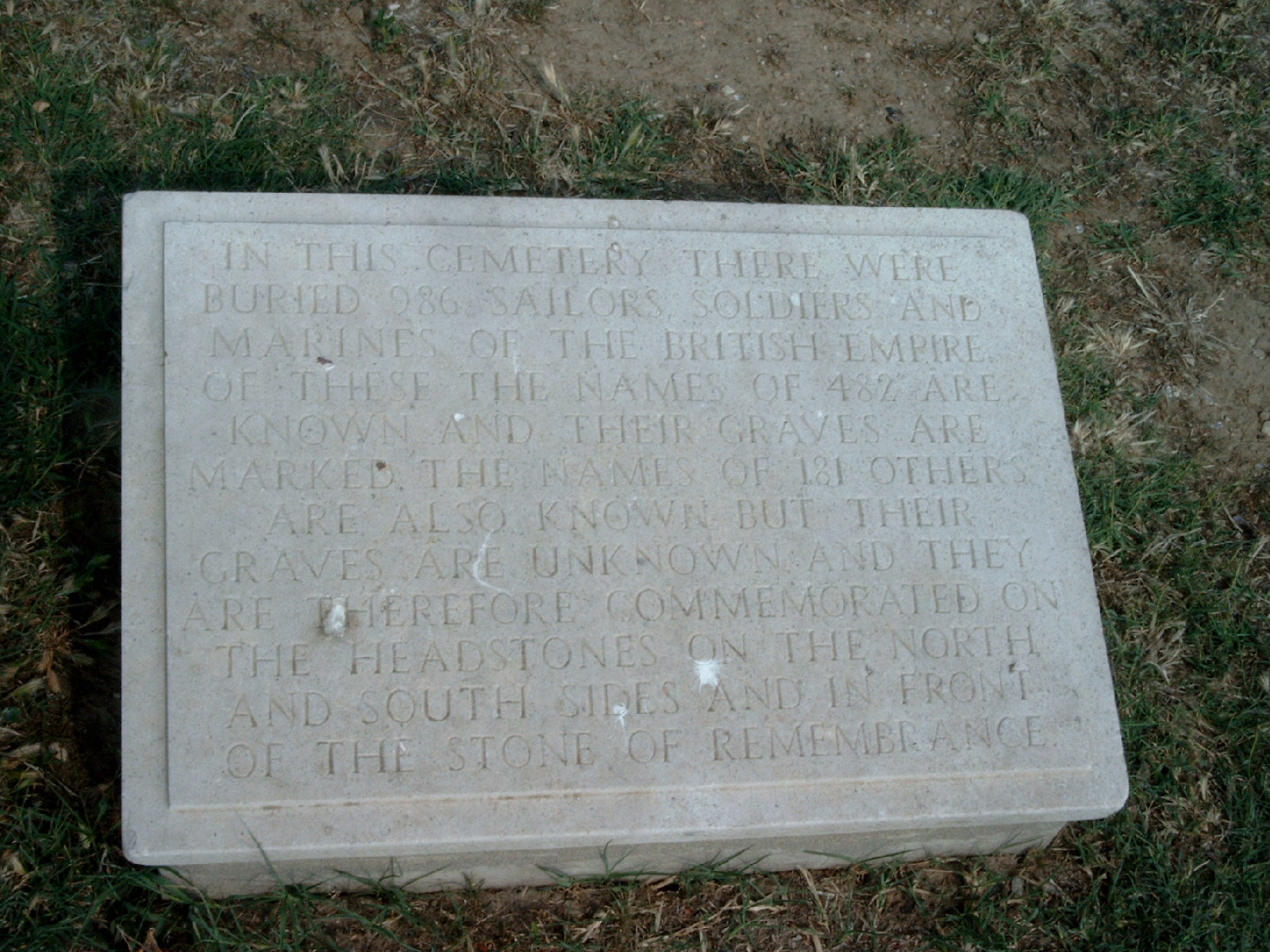
Lone Pine Cemetery


Looking south along the coast.


In the foreground: tombstones at Lone Pine Cemetery.
In the background: the monument to the 57th regiment of the Ottoman Army
(see the next installment).


The text on this tombstone reads:
 
BELIEVED TO BE
BURIED IN THIS CEMETERY
***
2032 PRIVATE
J. G. A. STOKES
2ND BN. AUSTRALIAN INF.
7/14 AUGUST 1915 AGE 21
* * *
THEIR GLORY SHALL NOT
BE BLOTTED OUT


The text on this tombstone reads:

905 PRIVATE
W. H. EDMENDS
23 BN. AUSTRALIAN INF.
7 DECEMBER 1915 AGE 18
***
IN LOVING MEMORY


The modern road runs between Lone Pine Cemetery and Johnston's Jolly.
The road corresponds to the narrow strip of no man's land between the two sides
during the military campaign of 1915.
 

Remains of a trench from the military campaign in 1915.
 

Johnston's Jolly Cemetery


In the foreground: Johnston's Jolly.
In the background: Lone Pine Cemetery.


The modern name of this location refers to colonel J. L. Johnston of the 11th West Australian Battalion that was stationed here. Whenever he wished to fire up his men, he would always say:
"Let's jolly up the Turks."


In the foreground: Johnston's Jolly Cemetery.
In the background: Lone Pine Cemetery.


The entrance to an underground shelter from the campaign in 1915.


Remains of trenches from 1915.


 * * *
 
Go to the next installment:
 
 
* * *


A Visit to Gallipoli (4)

Section 4
The Monument to the 57th Regiment of the Ottoman Army
 

The monument to the 57th regiment seen from a distance.


The monument to the 57th regiment seen from Johnston's Jolly


The 57th regiment of the Ottoman Army (Turkish text).


By the entrance to the monument:
A statue of an Ottoman (or Turkish) soldier, known as Johnny Turk.


The past, the present and the future:  An old man, a Turkish war veteran, and a young girl holding hands. The old man is a symbol of the past, while the young girl is a symbol of the present and the future.
 

This relief shows Mustafa Kemal Atatürk leading the soldiers of the Ottoman Army
in the struggle against the ANZAC troops.


The cemetery where soldiers of the 57th regiment are buried.


* * *
 
Go to the final installment:
 
 
* * *


A Visit to Gallipoli (5)

Section 5
Chunuk Bair

Remains of trenches from the campaign of 1915.


On the left, a monument to the soldiers of New Zealand.
On the right, a statue of Mustafa Kemal Atatürk.

The statue of Mustafa Kemal Atatürk.


The monument to the soldiers of New Zealand.


Looking north along the coast of the Gallipoli Peninsula.


In the distance you can see Suvla Bay further north.


Looking north along the coast.

Remains of trenches from 1915.


The entrance to an underground shelter from 1915.

The monument to the soldiers of New Zealand.

The statue of Mustafa Kemal Atatürk.

* * *
 
For more information about this place, see my blogs:
 
Gallipoli 1915 (3)

Canakkale (1)

Canakkale (2)

Canakkale (3)

* * *

For more information on this topic, see Revealing Gallipoli, a documentary film aired by ABC Australia Network in 2005; released on DVD in 2005 and again in 2011. Background information about this film can be found in an article in the Australian newspaper The Age, 21 April 2005. Here is a link:

Gallipoli Revealed

* * *