Thursday, September 3, 2020

Wormwood (2017)


 Wormwood (TV Mini-Series 2017) - IMDb


Wormwood is a documentary series in six parts which premiered on Netflix in 2017. The topic is a mysterious case which involves the CIA, secret research projects, and secret experiments on members of staff.


At the centre of this incredible case is a scientist (Frank Olson) and the date on which he died (28 November 1953).


The day before (27 November 1953), Frank Olson and some of his CIA colleagues checked into the Statler Hotel in New York. Frank Olson and a colleague were booked in a room on the tenth floor.


Shortly after midnight (on 28 November) Frank Olson died. He fell from his room on the tenth floor to the pavement below. He died almost instantly. Why did he fall? There are two ways to answer this question:


# 1. He jumped. In that case it was suicide. If this answer is true, we have to ask: why did Frank Olson want to kill himself?


# 2. He was pushed. In that case it was murder. If this answer is true, we have to ask: who pushed him out of the window and why did they do it?


When Frank Olson died, he left behind his family: a wife and three young children (a daughter and two sons). His wife was now a widow. His children were now fatherless. Obviously, this episode made a huge impact on them. They did not know and could not understand why this terrible event had taken place.


Different answers and explanations were offered at different times:


** In 1953, when his death was announced.

** In 1975, when a number of top secret government documents about the CIA were declassified.

** Later on, when additional information was discovered.


Step by step, new information was released. Whenever this happened, it was not easy to know if the new information was true or not. Was this information released because it was true or because it might seem plausible? Was this information merely given in order to stop the questions and in order to hide the real truth?


Here are some key words and key questions which are mentioned when the case is discussed:


** LSD, brainwashing, truth serum, mind control, the Cold War, chemical and biological warfare, MK-ULTRA

** If a foreign spy is captured by the US, is there any way to make him reveal all the secrets he knows?

** How can we control the mind of another person?

** How can we know what is going on in his mind?

** How can we know if he is telling the truth or if he is lying?


In 1953. the Olson family had five members:


** Frank Olson, who worked as a scientist for the CIA for several years, was born in 1910.

** Alice, his wife, who was born in 1916; she died in 1993.

** Lisa, the daughter, who was born in 1945; she was killed in a plane crash in 1978.

** Eric, the older son, who was born in 1944.

** Nils, the younger son, who was born in 1948.


As stated above, the death of Frank Olson made a huge impact on the surviving members of his family.


The younger son Nils tried to let it go and tried to move forward in order to have a normal life.


The older son Eric could not let it go. He devoted most of his adult life to investigating this case; trying to discover why his father had died; collecting documents and information; doing as much as he could to publicize the case.


In this documentary series we follow the investigation which has been going on for decades. Some new details have been discovered, and some questions have been answered, but other questions remain unanswered.


The case is not yet closed, because the final truth – the final answer - has not yet been found.


The documentary series is composed of three elements:


# 1. Interviews with persons who are connected with the case

# 2. Reconstruction of some historical scenes in the 1950s.

# 3. Old clips and old photos which are used to illustrate the statements made by the persons who are interviewed.


Here is some basic information about the documentary series:


** Director: Errol Morris

** Writers: Kieran Fitzgerald, Steven Hathaway, and Molly Rokosz

** Run time: 6 x ca. 40 minutes = ca. 240 minutes


THE FOLLOWING ACTORS APPEAR  WHEN HISTORICAL SCENES ARE RECONSTRUCTED

** Peter Sarsgaard as Frank Olson (1910-1953)

** Molly Parker as Alice Olson (1916-1993)

** Christian Camargo as Dr Robert Lashbrook

** Scott Shepherd as Vincent Ruwet (1916-1996)

** Tim Blake Nelson as Sidney Gottlieb (1918-1999)


THE FOLLOWING PERSONS ARE INTERVIEWED

** Eric Olson – Frank Olson’s son (born 1944)

** David Rudovski – attorney at law (born 1943)

** Seymour Hersh – reporter, writer (born 1937)

** Harry Huge – attorney at law

** Stephen Saracco – Assistant District Attorney, New York


I am not going to tell you what they say. I do not wish to spoil the viewing for anyone. Besides, there are so many details here; it is hard to know where to begin and where to end.


What do reviewers say about this documentary series? Here are the results of three review aggregators:


70 per cent = IMDb

82 per cent = Meta

90 per cent = Rotten Tomatoes (the critics)

65 per cent = Rotten Tomatoes (the audience)


As you can see, the ratings are quite good. When you look at Rotten Tomatoes, you can see that there is a significant difference between the professional critics and the general audience. The former are more positive than the latter.


I think I know why: the general audience feels the story is too slow and too long; there are too many details, and it takes forever to get to the end of the story. The professional critics have a different point of view. They do not think the story is too slow or too long; they think each and every detail is important and they believe the story must take a long time to develop in order to illustrate the long struggle and the endless efforts to discover the truth.


In this case I have to side with the critics. They are right. The audience is too impatient.


I want to go all the way to the top with this product. I think it deserves a rating of five stars (100 per cent).


PS # 1. The following items are available online:


** Matthew Hay Brown, “Six Decades Later, Sons Seek Answers on Death of Detrick Scientist,” The Baltimore Sun, 8 December 2012

** Lisa Liebman, “LSD, Lies, and the CIA: The Incredible True Story Behind Wormwood,” Vanity Fair, 14 December 2017

** Tamsin Shaw, “The Bitter Secret of Wormwood,” New York Review, 18 January 2018


PS # 2. The story of Frank Olson and his mysterious death in 1953 is the topic of the following book: A Terrible Mistake: The Murder of Frank Olson and the CIA’s Secret Cold War Experiments by H. P. Albarelli, Jr. (2008).


*****

 From mind control to murder? How a deadly fall revealed the CIA's darkest  secrets | US news | The Guardian


Frank Olson (1910-1953)


*****

 The Ashtray by Errol Morris review – revenge against Thomas Kuhn | Books |  The Guardian


Errol Morris (born 1948)


*****


Thursday, August 13, 2020

Within the Whirlwind (2009)


Within the Whirlwind - Wikipedia


Within the Whirlwind is a historical and biographical drama (based on a true story) which premiered in 2009. It is produced by companies in Belgium, Germany and Poland. But the story is set in the Soviet Union in the 1930s and the 1940s. And the main character is Eugenia Ginzburg, a teacher at the University of Kazan, who was a victim of the Great Purge (1936-1938), which is also known as Stalin’s Reign of Terror. 


Here is some basic information about this drama:


** Director: Marleen Gorris

** Writer: Nancy Larson

** Based on Eugenia Ginzburg’s autobiography (first published in the west in 1967)

** Language: English

** Run time: 117 minutes


The cast includes the following:


** Emily Watson as Eugenia Ginzburg (1904-1977) – a teacher at the University of Kazan

** Benjamin Sadler as Pavel Aksyonov – Eugenia’s second husband – a Soviet official in Kazan

** Pam Ferris as Avdotya Aksynova – Eugenia’s mother-in-law

** Ian Hart as Beylin – a Soviet official in Kazan

** Ben Miller as Krasny – editor of a Soviet journal published in Kazan

** Pearce Quigley as Nikolai Yelvov – a teacher at the University of Kazan

** Radoslaw Krzyzowski as Dimitrij Dikovitsky – a man on the train to Moscow

** Jimmy Yuill as Sidorov – a Soviet official in Moscow

** Ulrich Tukur as Anton Walter (1899-1959) – a German doctor in Siberia

** Nick Dong-Sik as Confucius – Dr Walter’s assistant


A note on family:


** Eugenia’s first husband Dimitrij Fedorov is the father of her first son Alexei (Alyosha) (1926-1941)

** Eugenia’s second husband Pavel Aksyonov is the father of her second son Vasily (Vaska) (1932-2009)


The husband Pavel and the two boys appear briefly in the beginning of the movie. After that they disappear.


Since this drama is based on a true story, the basic facts are part of the public record. They are not a secret. Therefore I feel free to mention some of them in this review. Besides, I need to mention some details in order to explain my rating.


While this drama is based on a true story, it is not a documentary film. It is a dramatized version of events. Not everything happened exactly as shown in this movie. But the basic story is true.


As stated above, this drama is about Eugenia Ginzburg, but it does not cover her whole life from the beginning in 1904 to the end in 1977. 


** The first 30 years (1904-1934) are excluded

** The last 30 years (1947-1977) are also excluded

** The time frame is 1934-1947


In 1934, when the story begins, Eugenia lives in Kazan, located ca. 800 km east of Moscow, with her husband Pavel and her two sons. She is a loyal member of the communist party. She works as a teacher at the University of Kazan. Her husband Pavel is a Soviet official in Kazan. The family has a good life and a nice home.


But in 1934 Eugenia’s life is turned upside down and soon the whole family will fall apart. In the wake of the killing of Kirov in Moscow, the communist party begins a hunt for subversives, disloyal members of the communist party, who are accused of working for or with Leon Trotsky who is at this time living in exile,


The first local victim is Yelvov who is removed from his position. Soon Eugenia is also under suspicion. She claims she is innocent, and at first she is not arrested. For three years her life is in a limbo because she is often interrogated and barred from teaching, but still free. In 1937, she is arrested and placed in a prison in Moscow. She is tried in a court of law and sentenced to ten years in a labour camp in Siberia. She is sent to Kolyma in eastern Siberia where she serves her sentence.


In 1947, she is released, but not allowed to leave the region. In 1955, two years after Stalin’s death, she is exonerated, declared innocent, and she moves to Moscow where she writes her autobiography.


Since it cannot be published in the USSR, the manuscript is smuggled out to the west where it appears in 1967.


In this historical drama, we follow Eugenia from 1934 when she is caught up in the whirlwind until her release in 1947. What do reviewers say about it? Here are the results of two review aggregators:


36 per cent = Rotten Tomatoes (the general audience)

68 per cent = IMDb


As you can see, the ratings are not impressive. They range from poor to average. Is there a reason for this harsh verdict? Is it fair? I have to say yes. The topic is interesting and important, but the movie about Eugenia’s turbulent life has a number of flaws, which cannot be ignored. Let me explain:


# 1. The story takes place in the USSR where most people speak Russian. But in this movie, all characters speak English. It is odd to hear Soviet officials bark their orders in English when they should be spoken in Russian.


This is a serious violation of historical truth. All efforts to recreate the Soviet world of the 1930s and the 1940s are totally shattered whenever a character starts to talk.


# 2. In the movie, Eugenia is a professor of Russian literature. In the real world, she was an associate professor teaching the history of the All-Union Communist Party and later the history of Leninism. Which is not as romantic!


# 3. In the movie, we see Eugenia teaching. Her teaching means reading out loud lines of a Russian author with a solemn voice. Then asking student A to take over the declamation. Then asking student B to take over the declamation. And so on.


Reading lines of a poem out loud is not teaching. When you teach literature, you must talk about the author and his style. You must ask questions: does the author have a message? If yes, what is it? How does the author work? In this a great work? If yes, what makes this a great work?


Eugenia never asks questions like this. Perhaps because she never was a teacher of Russian literature!


# 4. In one scene, Eugenia returns essays which her students have written for class. One student did not use punctuation. When she asks him why, he says it does not matter. The reader may add punctuation if he wants.


Eugenia disagrees. Punctuation is very important, she says, and to prove her point she writes a sentence on the blackboard. If we put the comma in one place, the sentence has one meaning. But if we put the comma in another place, the sentence has the opposite meaning. This is an interesting observation. However, there is a problem here. What is wrong?


The sentence on the blackboard is Russian. The words are written with Cyrillic letters. But the characters speak English! In order to create some historical reality, Emily Watson writes the words with Cyrillic letters, but when she talks about the sentence, she speaks English which means the historical reality is completely broken.


Are we in a Russian world or not? Look at the blackboard, and the answer is yes. Listen to the actors, and the answer is no!


# 5. As stated above, Eugenia’s husband Pavel and her two sons appear briefly in the beginning of the movie. But the movie does not reveal that Pavel is her second husband and only the father of her younger son Vasily (Vaska).


The movie does not reveal that her older son Alexei (Alyosha) is the son of her first husband Fedorov (who is never seen).


Perhaps the movie-makers decided that this detail was too complicated to explain?


# 6. In one scene, Eugenia takes the train to Moscow. She wants to find someone who can support her claim of innocence. We see her sitting in a compartment. She is in one corner, reading a book. In the opposite corner there is a man. They do not talk. We have the impression they have been sitting in silence like this for a while. 


Suddenly the man begins to talk: “Eugenia? I think you are Eugenia Ginzburg.” 


It turns out they know each other. They were friends many years ago. She remembers his name: Dimitrij Dikovitsky. But if they know each other, why did they not recognize each other when he entered the compartment? The scene is odd.


In Eugenia’s autobiography, she does not meet Dikovitsky on the train from Kazan to Moscow. She meets him in Moscow outside the building where she hopes to find someone who will accept that she is innocent. This makes more sense. In the movie the meeting is moved to the train and the scene is odd.


# 7. When Eugenia gets to Moscow, she meets with a Soviet official Sidorov who is very helpful. Having looked at her case, he says the charge can be dropped and the ban on teaching can be cancelled. This is fine. She leaves his office and leaves the building in a good mood.


But when she is outside, she hears someone calling her from a window on the first floor. Sidorov is calling: “Please come back inside.” When she meets him again, he sings a different song:  

He says the charges cannot be dropped and the ban on teaching cannot be cancelled. In addition, she must hand over the card which shows that she is a member of the communist party. This change took place in five minutes! This is not realistic!


In the real world, Sidorov did try to help her at first, but when Beylin found out what Sidorov had done, he was so upset about it that he forced him to reverse his decision in the case. There was a change, but the decision was not changed in five minutes. Why do the movie-makers create a scene which is unrealistic?


# 8. Eugenia’s older son Alexei (Alyosha) was taken from Kazan to Leningrad. In 1941, Eugenia is told that her son is dead. He has died of starvation during the German siege of Leningrad. Eugenia is so devastated that she loses the will to live. In the movie, we see how she is nursed back to life by the camp doctor, the German doctor Anton Walter, who is friendly and optimistic, in spite of the difficult conditions in the camp.


In the real world, the person who nursed her back to life was a Russian doctor, Angelina Klimenko, who was the wife of an NKVD police officer. But Klimenko is not seen in the movie. She has been removed from history, perhaps because she was married to a member of the NKVD.


The German doctor Anton Walter is a real person. In the movie it is clear that he likes Eugenia. But she does not want to like him, because she regards him as part of the Soviet system of oppression. When she is told that he is a prisoner too, she changes her mind. She likes him as well.


Anton Walter was a Volga German who had been arrested in the 1930s and then sent to Siberia. He was the camp doctor, but he was also a prisoner. When the authorities discovered that Anton and Eugenia had fallen in love with each other, he was transferred to another camp!


# 9. Throughout the movie, Eugenia recites passages of Russian literature to herself and sometimes to fellow prisoners in the camp. She does this to keep her sanity. To remember the world outside the camp.


One reviewer (Berndt Reinhardt) comments on this aspect:


“In the film the continual literary recitations become boring. The theme of literature was apparently seized upon in order to fill the ideological vacancy of the film.”


[Source: World Socialist Website]


I think he has a good point here. The literary recitations are connected with the fact that she was a professor of Russian literature at the University of Kazan. But in the real world she was not a professor of Russian literature. This position was merely invented by the movie-makers. Why? Perhaps because they wanted the theme of literature to run though the movie; perhaps because they thought that this would make the main character more likeable.


Who wants to like a teacher of Leninism? No, this will not do. Let us make her a professor of Russian literature. This is so much better. Now she is likeable.


CONCLUSION

The topic is interesting and important. Eugenia may have been naïve when she decided to join the communist party. But when the party accused her of working with or for Leon Trotsky, she refused to give in. Many other party members who were accused signed a confession, but Eugenia never did this. She insisted she was innocent. In this way she was unique.


It could have been a great movie. Unfortunately, it is not. The movie about Eugenia’s turbulent life in the USSR in the 1930s and the 1940s has a number of flaws; some of them are fatal. This is why the poor ratings are justified. This movie is not great; it is not even good. It is just average. And therefore it cannot get more than three stars.


PS # 1. Eugenia and Anton found each other again once they were both released from their prison camps. Sadly, they did not have long time together. He passed away in 1959.


PS # 2. Antonina Aksyonova was born in 1946. In 1949 she was adopted by Eugenia. In this way she became Eugenia’s stepdaughter. She knew Eugenia well during the last part of her life. She appears in a documentary film about her stepmother made by German filmmaker Mario Damolin. On You Tube you can find a clip where she talks about her stepmother.


PS # 3. Ivan Panikarov has founded a small museum about the labour camps in Kolyma during the time of Stalinism. For details, see the following article: Shaun Walker, “Russia’s Gulag camps cast in a forgiving light of Putin nationalism,” The Guardian, 29 October 2015.


*****
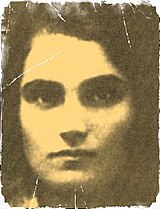
Yevgenia Ginzburg - Wikipedia


Eugenia Ginzburg (1904-1977)


*****

Within the Whirlwind by Evgenia Ginzburg


The cover of Eugenia Ginzburg's autobiography


First published in 1967


*****


Saturday, August 8, 2020

Black Book (2006)


Black Book (2006) - IMDb


Black Book is a Dutch historical drama which premiered in 2006. The topic is the German occupation of the Netherlands during World War Two and the Dutch resistance movement which fought against the German forces.


Here is some basic information about this drama:


** Original Dutch title: Zwartboek

** Director: Paul Verhoeven

** Writers: Paul Verhoeven and Gerard Soeteman

** Languages spoken: mostly Dutch and German; sometimes English or Hebrew

** Run time: 145 minutes


The cast includes the following:


** Carice van Houten as Rachel Stein (aka Ellis de Vries) – Dutch resistance

** Derek de Lint as Gerben Kuipers – Dutch resistance

** Thom Hoffman as Hans Akkermans – a Dutch doctor

** Dolf de Vries as Wim Smaal – a Dutch lawyer


** Waldemar Kobus as Günther Franken – a German officer (lieutenant)

** Sebastian Koch as Ludwig Müntze – a German officer (captain)

** Christian Berkel as Käutner – a German officer (lieutenant general) (no first name)

** Halina Reijn as Ronnie – a Dutch secretary (no last name)


This drama is not based on a true story. It is inspired by several true events and characters. What does this mean? I assume this means the story is not a fantasy; it is supposed to be realistic.


I think most of what we see in this drama is realistic, although there are some scenes where the desire for historical accuracy has been sacrificed in favour of the desire for dramatic and spectacular effects; this happens in particular towards the end of the drama.


I do not wish to spoil the viewing for anyone. Therefore I am not going to say much about the plot which runs from 1944 to 1945. If you wish to know what happens in this movie, you will have to watch it.


What about the title? Why is it called the Black Book? I am not going to tell you. The answer to the question is given towards the end of the movie. Watch the movie all the way to the end and you will find the answer.


What do reviewers say about this historical drama? Here are the results of three review aggregators:


71 per cent = Meta

77 per cent = IMDb

87 per cent = Rotten Tomatoes (the general audience)

75 per cent = Rotten Tomatoes (the professional critics)


As you can see, the ratings are good but not great. The average rating is around 80 per cent, which corresponds to four stars on Amazon.


If you ask me, this level is very appropriate. To prove my point, I will mention one detail which I regard as positive and one detail which I regard as negative:


THE POSITIVE

Several languages are spoken in this drama. The Dutch speak Dutch among each other, as they should, while the Germans speak German among each other, as they should. When a Dutch person and a German person must communicate with each other, they will usually speak German.


This is realistic. This gives the drama a high degree of historical authenticity.


THE NEGATIVE

In the drama, the members of the Dutch resistance group has an office where they all meet quite often. In this office they seem to have all their secret documents and all their weapons. This is not realistic.


An experienced resistance group would never have all their secrets and all their members in one location. This was far too dangerous. If the Germans are tipped off about this location, they will be able to catch the whole group in one swift operation.


A real resistance group would never operate like this. They would use different hiding places and they would not meet each other all the time at the same location.


Having many members of a resistance group meeting at the same location again and again is a clear violation of historical accuracy.


CONCLUSION

This drama is good, but not great. Therefore I think it deserves a rating of four stars (80 per cent).


PS # 1. The drama opens and closes with a brief moment which is set in Israel in 1956. This means the main story about the German occupation of the Netherlands and the Dutch resistance movement is sandwiched between an introduction and an epilogue which is set eleven years after the end of World War Two. Why?


I am not sure why this is done. I do not regard this as a good idea or a bad idea. I regard it as irrelevant. I do not think it serves a great purpose. I think the main story about what happens in the Netherlands 1944-1945 is good enough to stand on its own. It does not need to be framed by two brief moments which are set in another country more than ten years after the end of the war.


PS # 2. The history of the Netherlands during and shortly after World War Two is the subject of several historical dramas. Here are some examples:


** Riphagen (2016)

** A Real Vermeer (2016)

** The Resistance Banker (2018)


*****


Black Book (film) - Wikipedia


A Dutch poster for the movie


*****


A Real Vermeer (2016)


A Real Vermeer (2016) - IMDb


A Real Vermeer is the English title of a Dutch historical and biographical drama (based on a true story) which premiered in 2016. Here is the plot:


In 1945, at the end of World War Two, the Dutch artist and art dealer Henricus “Han” van Meegeren is accused of having sold a precious Dutch work of art (a real Vermeer) to the German Nazi leader Hermann Göring, who was an avid collector of art.


Was van Meegeren a traitor or not? Did he sell a real Vermeer to a Nazi leader? In this drama we follow the official investigation of the case and we learn the fascinating details of a masterful forgery.


Here is some basic information about this drama:


** Original Dutch title: Een echte Vermeer

** Director: Rudolf van den Berg

** Writers: Rudolf van den Berg and Jan Eilander

** Language: mostly Dutch; sometimes English or German or Italian

** Run time: 114 minutes


The cast includes the following:


** Jeroen Spitzenberger as Henricus “Han” van Meegeren (1889-1947) – the artist

** Dewi Reijs as Anna van Meegeren (1890-1978) – his wife

** Hayo de Wilde as Jacques “Jac” Henri Emil van Meegeren (1912-1977) – his son - younger version

** Mingus Dagelet as Jac van Meegeren – older version


** Porgy Franssen as Abraham “Bram” Bredius (1855-1946) – a famous Dutch art critic

** Lize Feryn as Jolanka Lakatos – his wife

** Roeland Fernhout as Theo van der Pas – a friend

** Claude Humbert as Hermann Göring (1893-1946) – a Nazi politician


** Angela Hick as Wilhelmina (1880-1962) – Queen of the Netherlands 1890-1948

** Hans Croiset as the president of the court

** Viviane Muynck as the psychiatrist


Since this drama is based on a true story, the basic facts are part of the public record. They are not a secret. Therefore I could mention many of them here, but I am not going to do that. I do not wish to spoil the viewing for anyone. I will only mention a few basic details, so you can understand the case.


While this drama is based on a true story, it is not a documentary film. It is a dramatized version of events. Not everything happened exactly as shown here. But the main story is true.


Most of this drama takes place in the Netherlands just after the end of World War Two. The time frame is 1945-1947. But there are some flashbacks to earlier times: the 1920s, the 1930s and the time of the war. There is also a flashback to a moment in Rome (Italy) in the 1930s.


In the early part of his career, Han van Meegeren is a struggling artist. He feels he does not get the recognition he deserves. He is called an amateur and a charlatan. He is very upset about this. He wants to get revenge on the critics who fail to recognize his talents. In particular Abraham Bredius.


He decides that he is going to show them just how great he really is. Even if he can never reveal exactly how he gets his revenge. This is the motivation which drives him into the world of forgery.


He carefully creates a new Vermeer which is accepted in the world of art as a lost and found Vermeer. Even the famous art critic Abraham Bredius accepts this painting as a real Vermeer.


Now van Meegeren has his revenge on the art critics who did not appreciate his talents; selling a fake Vermeer to the German Nazi leader Hermann Göring for a huge amount of money is the ultimate triumph.


He cannot know that this fantastic feat will later come back to haunt him once the war is over and the new leaders of the Netherlands start looking for collaborators!


What do reviewers say about this historical drama? On IMDb it has a rating of 61 per cent, which corresponds to three stars on Amazon. On the US version of Amazon there are at the moment 21 ratings. The average rating is 4.1 stars. If you ask me, both ratings are too low. Why? I have three reasons:


# 1. The script is well-written and the actors play their roles well.

# 2. The story is captivating, dramatic and often highly emotional.

# 3. The drama is based on a true story.


I want to go all the way to the top with this product. I think it deserves a rating of five stars.


PS # 1. The famous Dutch artist Johannes Vermeer (1632-1675) did not paint many paintings. This is why every single real painting by his hand is regarded as very important and very valuable.


PS # 2. For more information, see the following books:


** I Was Vermeer: The Legend of the Forger Who Swindled the Nazis by Frank Wynne (hardcover 2006, paperback 2007)

** The Man Who Made Vermeers: Unvarnishing the Legend of Master Forger Han van Meegeren by Jonathan Lopez (2008)

** The Forger’s Spell: A True Story of Vermeer, Nazis, and the Greatest Art Hoax of the 20th Century by Edward Dolnick (2009)

** The Art of Forgery: The Minds, Motives and Methods of Master Forgers by Noah Charney (2015)

** Fake: The Crimes of Han van Meegeren by Thomas Thibeault (2016)


PS # 3. The following documentaries about the world of art are available on DVD:


** Art of the Heist – 14 episodes on four discs (2006)

** Raiders of the Lost Art – 6 episodes on two discs (2014)


PS # 4. The Last Vermeer is an American historical drama which premiered in 2019. The original title of this drama was Lyrebird. It is based on the book The Man Who Made Vermeers by Jonathan Lopez (2008).


*****


How Mediocre Dutch Artist Cast 'The Forger's Spell' : NPR


Han van Meegeren (1889-1947)


*****