Friday, August 7, 2020

Riphagen: The Untouchable (2016)


Riphagen (2016) - IMDb


Riphagen is a Dutch historical drama (based on a true story) which premiered in 2016.


The topic is the Netherlands during World War two with special focus on a traitor (Dries Riphagen) who collaborated with and assisted the German occupation forces in many different ways.


Here is some basic information about this drama:


** English title: Riphagen – The Untouchable

** Director: Pieter Kuijpers

** Writers: Thomas van der Ree and Paul Jan Nelissen

** Based on the book Riphagen, Al Capone by Bart Middelburg and René ter Steege (2010)

** Languages spoken: Dutch and German

** Run time: 131 minutes


The cast includes the following:


** Jeroen van Koningsbrugge as Dries Riphagen (1909-1973)

** Mark Rietman as Louis Einthoven (1896-1979)

** Anna Raadsveld as Betje Wery (1920-2006)

** Michael Sluysmans as Wim Sanders (1908-1995)

** Richard Gonlag as Willy Lages (1901-1971)


** Kay Greidanus as Jan van Liempd

** Guido Pollemans as Harry Rond

** Peter Blok as Gert van der Veen

** Sieger Sloot as Frits Kerkhoven


** Sigrid ten Napel as Lena

** Lisa Zweerman as Greetje

** Antoinette Jelgersma as Esther Schaap


Since this drama is based on a true story, the basic facts are part of the public record. They are not a secret. Therefore I could mention many of them here. But I am not going to do that. I do not wish to spoil the viewing for anyone.


While this drama is based on a true story, it is not a documentary film. It is a dramatized version of events. Most characters are real historical persons, but some characters are fictional (for instance Jan van Liempd). Not everything happened exactly as shown here. But the main story is true.


There are many movies about World War two. What is so special about this movie? Here is the answer: this movie shows us that the history of the Netherlands during World War Two cannot be told in black and white; it is not only about the good guys and the bad guys.


Between the good guys and the bad guys there are many shades of grey. The German forces are the bad guys and the Dutch resistance are the good guys. We know that. We also know the collaborators are bad guys. But this is not the whole story.


What about a member of the resistance who secretly helps the Germans? What about a collaborator who secretly helps the resistance?


In this drama we see many different characters, but it is not always easy to know where they actually stand in the conflict; it is not always easy to know which role they are really playing in the conflict.


Just when you think you know who is good and who is bad, something happens, and you realize you were wrong; you were deceived; you were misled.


Riphagen was a criminal before the war. In 1940, when the German occupation begins, he realizes that the new situation offers new and excellent opportunities for him. During the German occupation, he is the ultimate traitor. 


Why? What does he do? 


Here is a partial answer. He:


** betrays members of the resistance to the Germans

** promises Dutch Jews who are hiding that he is going to help them

** promises Dutch Jews who are hiding that he will keep their valuables safe during the war and that he will return the valuables to them after the war

** keeps the valuables for himself

** tells the Germans where they can find Dutch Jews who are hiding from the Germans

** is paid by the Germans for his services


Riphagen works for the German occupation forces in many different ways. This is true. But most of all - and more than anything else - he works himself.


Riphagen is the ultimate survivor. Time and again he is in big trouble; he is in hot water. But each time he manages to talk himself out of it. He manages to get away scot-free. He is involved in numerous extremely dangerous affairs, but he always survives. 


How does he do it?


It is said that he has a silver tongue. When he talks, he is very convincing. He will make up stories and details in order to show that he is completely innocent and not guilty of any crime at all.


For a moment, it works: people believe him, and this is all he needs. When people realize that it was merely a trick, he is already gone. It is too late to catch him!


This is what we see in this movie. This is what makes the movie special. This is why it stands out among the numerous movies about World War two.


What do reviewers say about it? Here are the results of two review aggregators:


71 per cent = IMDb

81 per cent = Rotten Tomatoes (the general audience)


As you can see, the ratings are good, but not great. If you ask me, both rating are too low. Why? 


I will offer three reasons:


# 1. The script is well-written and the actors play their roles well.

 # 2. The story is captivating, dramatic, and often highly emotional.

 # 3. The drama is based on a true story.


I want to go all the way to the top with this product. I think it deserves a rating of five stars (100 per cent).


PS. The following review is available online: 

Erik Lundegaard (blog):

Movie Review: Riphagen (2016) 

10 March 2018.


*****

Dries Riphagen – Zwarthandelaar en jodenjager | Historiek


Dries Riphagen (1909-1973)


*****


The Resistance Banker (2018)


The Resistance Banker is the English title of a Dutch historical drama (based on a true story) which premiered in 2018.


The topic is the German occupation of the Netherlands during World War Two with special focus on a Dutch banker (Walraven van Hall) who used his position to help the Dutch resistance movement in its underground war against the German forces.


Here is some basic information about this drama:


** Original Dutch title: Bankier van het verzet

** Director: Joram Lürsen

** Writers: Marieke van der Pol and Thomas van der Ree

** Run time: 123 minutes


A note on language: in the original version the main language is Dutch, as it should be, since the story is set in the Netherlands. Netflix has a version which is dubbed into English. All dialogue is in English. All characters speak English: the Dutch as well as the Germans. This is a gross violation of historical truth. This is totally unrealistic!


The cast includes the following:


** Barry Atsma as Walraven van Hall (1906-1945) – a banker

** Jacob Derwig as Gijs van Hall (1904-1977) – Walraven’s older brother – a banker – after the war a politician, mayor of Amsterdam 1957-1967

** Fockeline Ouwerkerk as Tilly van Hall (1907-1988) – Walraven’s wife (married 1932-1945)

** Ali Zijlstra as Jeanette Veentra – a member of the Dutch resistance movement

** Pierre Bokma as Meinoud Rost van Tonningen (1894-1945) – a Dutch collaborator – financial administrator during the German occupation

** Eline Havenaar as Miep – a courier (see the PS)

** Raymond Thiry as Van den Berg


Since this drama is based on a true story, the basic facts are part of the public record. They are not a secret. Therefore I could mention many of them here. But I am not going to do that. I do not wish to spoil the viewing for anyone.


While the drama is based on a true story, it is not a documentary film. It is a dramatized version of events. Not everything happened exactly as shown here. But the basic story is true.


There are many movies about Word War Two. What is so special about this movie? Here is the answer: What is so special about this movie is that it focuses on the economic aspect of the German occupation and the Dutch resistance movement.


When the German forces occupied the Netherlands, they decided that the Netherlands should pay for the German occupation. To the Germans, this was only fair.


To many Dutch citizens, who were against the German occupation, this was an added insult; a provocation.


Walraven van Hall and his brother Gijs van Hall decided to embark on a devious and dangerous plan: they used their position as bankers to finance the secret Dutch resistance movement.


I am not going to explain how they did this. They had several elaborate and sophisticated methods. One of these methods is explained in the drama.


Technically, they broke the law, for instance by robbing the Dutch National Bank, but they justified their actions by telling themselves that once the war was over, and once Germany had lost the war, a new Dutch government would understand their reasons and agree that they had acted for the greater good of their country and its people. 


They were right.


What do reviewers say about this historical drama? Here are the results of two review aggregators:


69 per cent = IMDb

75 per cent = Rotten Tomatoes (the general audience)

100 per cent = Rotten Tomatoes (the professional critics)


As you can see, the ratings range from good to great. If you ask me, the critics of Rotten Tomatoes are right. Why? 


I have three reasons:


# 1. The script is well-written and the actors play their roles well.

# 2. The story is captivating, dramatic and often highly emotional.

# 3. The drama is based on a true story.


I want to go all the way to the top with this product. I think it deserves a rating of five stars.


Please note: this rating is for the original version of the drama in which the actors speak the language which corresponds to their nationality. The Netflix version, which is dubbed into English, cannot get more than two stars!


PS # 1. The following reviews are available online:


** Brian Costello - Common Sense Media

** Jonathon Wilson - Ready Steady Cut

** Bhaskar Chattopadhyay - First Post

** Greg Wheeler - The Review Geek

** Omar Sanchez - The Wrap


PS # 2. Hanneke Ippisch-Elkema (1925-2012) was a courier for Walraven van Hall using the code name Miep. In 1945, she was arrested by the Germans, but she was not executed; she survived the war in a prison cell. After the war, she left the Netherlands. First she moved to Sweden and later to the US where she lived for the rest of her life.


Many years after the war she wrote a book about her role in the Dutch resistance movement: Sky: A True Story of Courage during World War II (1996). The book is reviewed by Alex Baugh in the blog The Childrens War, 8 September 2011.


PS # 3. The following article is available online: Cnaan Liphshiz, “Film on forgotten Holocaust fighter rocks the box office in Holland,” Times of Israel, 23 October 2018.


PS # 4. The history of the Netherlands during and shortly after World War two is the subject of several historical dramas. Here are some examples:


** Black Book (2007)

** Riphagen: The Untouchable (2016)

** A Real Vermeer (2016) 

** The Jewish Council (2024)


*****


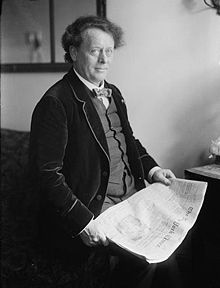
The Dutch banker

Walraven van Hall 

(1906-1945)


*****


Wednesday, August 5, 2020

The Conductor (2018)


Christanne de Bruijn in De dirigent (2018)


The Conductor is the English title of a Dutch historical and biographical drama (based on a true story) which premiered in 2018. The title refers to the Dutch-born American pianist Antonia Brico who was the first female conductor of a philharmonic or symphonic orchestra. Here is some basic information about this drama:


** Original Dutch title: De Dirigent

** Writer and director: Maria Peters

** Music composed by Quinten Schram and Bob Zimmerman

** Languages spoken: Dutch, English, German

** Run time: 139 minutes


The cast includes the following:


** Christanne de Bruijn as Antonia Brico (1902-1989)

** Gijs Scholten von Aschat as Willem Mengelberg (1871-1951) – a famous Dutch conductor

** Richard Semmel as Karl Muck (1859-1940) – a famous German conductor

** Scott Turner Schofield as Robin Jones – an American jazz musician

** Seumas F. Sargent as Mark Goldsmith – an American music teacher

** Carole Street as Eleanor Roosevelt (1884-1962) – wife of US President Franklin Delano Roosevelt

** Benjamin Wainwright as Frank Thomsen – manager of a concert hall in New York – a fictional character

** Annet Malherbe as Mrs Wolthuis - Antonia’s stepmother

** Raymond Thiry as Mr Wolthuis - Antonia’s stepfather


Since this drama is based on a true story, the basic facts are part of the public record. They are not a secret. Therefore I feel free to mention some of them in this review.


While this drama is based on a true story, it is not a documentary film. It is a dramatized version of events. Not everything happened exactly as shown here. But the basic story is true.


Here is a brief biography:


Antonia Brico was born in the Netherlands in 1902. Her biological mother gave her up for adoption when she was still an infant. She was adopted by a Dutch couple, Mr and Mrs Wolthuis, who gave her the name Wilhelmina Wolthuis.


In 1908, the Wolthius family immigrated to the US. They settled down in California where Antonia (Wilhelmina) grew up and went to school. In 1912, at the age of 10, she began to take piano lessons. Soon it was clear that she had a great talent for the piano.


In 1919, when she graduated from high school, her stepmother told her that she was adopted. She also told her that they had given her a new name when she was adopted. Antonia was so upset to learn these facts about her life that she walked away from her foster parents and never had any contact with them again.


In 1919 she enrolled into the University of California at Berkeley where she studied music and foreign languages. She graduated in 1923 with a BA in music. After graduation she decided to move to New York to start a new life. In 1924 she began to use her real name Antonia Brico.


As a young child she had dreamed of becoming a concert pianist. As a teenager she found a new dream: she wanted to become a conductor. But when she talked about this dream, most people told her it was impossible and unrealistic.


They said: a woman cannot be a conductor. There are no female conductors anywhere in the world. Forget it! However, Antonia could not give up on her dream.


In 1926, she travelled to the Netherlands to see if she could find some members of her biological family. While she was there, she met the famous Dutch conductor Willem Mengelberg. She wanted to study with him. He told her it was not possible, but he still wanted to help her. He suggested that she should go to Germany and meet with the famous German conductor Karl Muck. Maybe she could study with him? He wrote a letter of introduction that she could give to the German conductor.


In 1927 Antonia travelled to Germany where she met with Karl Muck and asked if she could study with him. At first he said no. But she insisted and after a while he accepted her. She stayed in Germany to study for her dream job. In 1930 her dream became true: she conducted the German Philharmonic orchestra. It was the first time a woman had done this.


In 1932, Antonia returned to the US where she worked as a conductor in several locations. She was lucky to have the support of several important and well-connected people, including the First Lady, Eleanor Roosevelt.


But there still was one problem: whenever she had a job, it was always just one or two concerts. Nobody wanted to give her a permanent position, because she was a woman!


In 1942 she moved to Denver, Colorado. This place became her main base for the rest of her life. She died there in 1989.


What about the movie? The movie is about Antonia Brico, but it does not cover her whole life from the beginning in 1902 until the end in 1989. The focus is on the 1920s and the 1930s.


** The drama excludes the first part of her life (1902-1926), more than twenty years


** The drama excludes the last part of her life (1940-1989), more than forty years.


In the drama, we follow Antonia’s life and career during the 1920s and the 1930s. When the drama begins, the year is 1926. The location is New York where she works as an usher in a concert hall. She is not a musician; she is not a conductor. Working as an usher in a concert hall is as close as she can get to her dream.


Antonia is 24. She still lives with her foster parents. Every week when she is paid for her work, she must go home and hand over her salary to her stepmother.


In 1926, when she is told about the adoption and the change of name, she decides to go to the Netherlands to look for members of her biological family. She is too late. Her mother is dead.


While she is there, she meets the famous Dutch conductor Willem Mengelberg who writes a letter of introduction for her. He tells her to go to Germany and see if she can study with the famous German conductor Karl Muck.


In 1927 she travels to Germany where she meets with Karl Muck. At first he says no. He does not want to accept an apprentice, but she does not give up and after a while he allows her to study with him.


In 1930 her dream finally comes true: she conducts the Berlin Philharmonic Orchestra. When she returns to the US, she is able to work as a conductor in several locations, but only for one or two concerts. She cannot get a permanent job as a conductor.


This is what we see in the drama. 


When you compare the movie with the brief biography above, you can see that not everything in the drama is accurate, but the basic story is true.


What do reviewers say about this drama? Here are the results of two review aggregators:


70 per cent = Rotten Tomatoes (the general audience)

72 per cent = IMDb


As you can see, the ratings are not bad. On the other hand they are not great. They are somewhere between three and four stars on Amazon. I can understand why. Antonia’s life is unusual, colourful and interesting, but the movie about her life is rather disappointing. There are a number of flaws:


** The chronology of events is inaccurate – an example: Antonia was not living with her foster parents in New York in 1926; she walked away from them seven years before (in 1919)


** Basic facts are distorted – an example: Antonia was not told about the adoption and the change of name in 1926; this happened seven years before (in 1919)


** Basic facts are excluded – an example: details about her stay in the Netherlands and about members of her biological family


** Fictional details are introduced – an example: a love story


** A fictional character is introduced – an example: Frank Thomsen, manager of the concert hall in New York


It could have been a great movie. Unfortunately, it is not. This drama is not great; it is not even good; it is average and therefore it cannot get more than than three stars (a rating of 60 per cent).


PS # 1. Maria Peters (born 1958) worked on this project for more than ten years. It is a shame she did not use the time to write a script that is historically accurate. Why is historical truth violated in so many ways?


PS # 2. For more information, see the following items:


** Antonia: A Portrait of the Woman is a documentary film which premiered in 1974. Director: Judy Collins, who studied with Antonia Brico when she was young. Run time: 58 minutes. This film is available online.


Unfortunately, the copy which is posted online suffers from poor technical quality. What is wrong? The speed is not constant. The sound of the music is distorted in a horrible way. But the interview parts of the film are quite interesting and give good insight into Antonia’s life and career.


** I Will Not Be Deflected From My Course: The Life of Dr Antonia Brico by Lance Eugene Christensen, a dissertation, Master of Humanities, Colorado University, 2000. 140 pages. This dissertation is available online (PDF).


*****


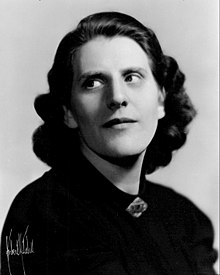
Antonia Brico (1902-1989)


A photo from 1940


*****


Willem Mengelberg - Wikipedia


Willem Mengelberg (1871-1951)


A famous Dutch conductor


*****


Karl Muck - Wikipedia


Karl Muck (1859-1940)


A famous German conductor


*****


Monday, August 3, 2020

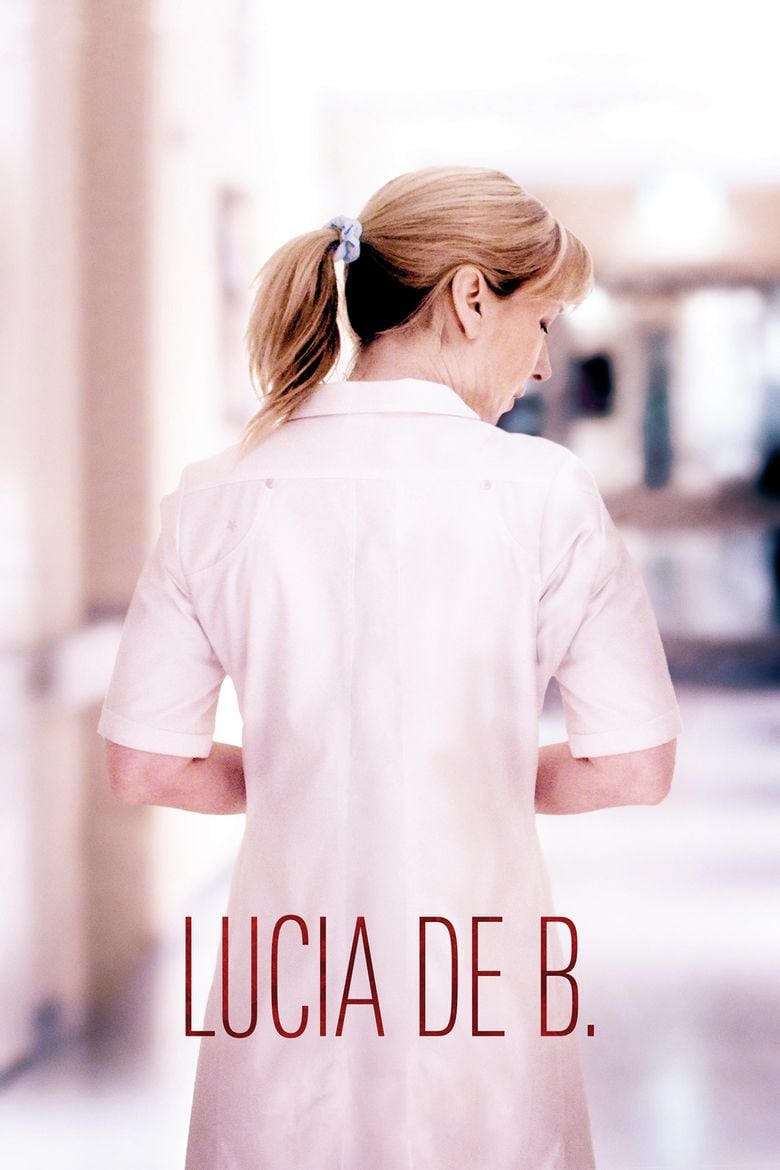
Accused (2014)


Accused (2014 film) - Alchetron, The Free Social Encyclopedia


Accused is the English title of a Dutch historical and legal drama (based on a true story) which premiered in 2014.


The topic is a case of wrongful conviction: Lucia de Berk, a nurse who works in a hospital, is arrested and accused of killing several patients (children who were sick and old people who were in pain). Lucia denies all charges. She claims she is innocent. But this does not help. She is tried in a court of law where she is found guilty. She is sentenced to life in prison with no possibility of parole.


Here is some basic information about this drama:


** Original Dutch title: Lucia de B.

** Director: Paula van der Oest

** Writers: Moniek Kramer and Tijs van Marle

** Available on DVD and via Amazon Prime Video

** Language: Dutch 

** Subtitles: English

** Run time: 92 minutes


The cast includes the following:


** Ariane Schluter as Lucia de Berk – a nurse – she is 40 years old in 2001 when the case begins

** Isis Cabolet as Fabienne – Lucia’s daughter – she is a teenager in 2001 when the case begins

** Bas Keijzer as Pete – Lucia’s boyfriend

** Fedja van Huet as Quirijin Herzberg – Lucia’s lawyer

** Barry Atsma as Jaap van Hoensbrock – director of the hospital where Lucia works in 2001 when the case begins

** Lineke Rijxman as Barbara Kobus – a doctor at the hospital where Lucia works in 2001 when the case begins

** Annet Malherbe as Ernestine Johansson – a senior prosecutor

** Sallie Harmsen as Judith Jansen – a junior prosecutor – she is 28 in 2001 when the case begins

** Amanda Ooms as Jenny – Lucia’s cellmate while she is in prison


Most characters are fictional. Perhaps fictional characters are used in order to protect the identity of those responsible for the wrongful conviction. But the following three characters are real: Lucia, her daughter Fabienne and her boyfriend Pete.


While this drama is based on a true story, it is not a documentary film. It is a dramatized version of events. Not everything happened exactly as shown here. But the basic story is true.


Since this drama is based on a true story, the basic facts are part of the public record. They are not a secret. Therefore I feel free to mention some of them in this review.


Here is a brief chronology of the case:


2001 – Lucia is arrested. She is accused of killing several patients. She denies all charges. She claims she is innocent.


2003 – Lucia is tried in a court of law where she is found guilty of four murders and three attempted murders. The sentence is life in prison with no possibility of parole


2004 – The case is tried in a court of appeal. The original verdict is upheld and the charge is increased: now she is found guilty of seven murders and three attempted murders. The sentence is also increased: now she must also undergo forced psychiatric treatment.


2006 – The Supreme Court of the Netherlands decides that adding forced psychiatric treatment to a life sentence is wrong. It is stopped. But the original sentence (life in prison) still stands.


2008 – The case is reopened – Lucia is released from prison while the case is being tried again.


2010 – All charges are dropped and Lucia is exonerated – The Dutch government pays Lucia an undisclosed amount of money as compensation for the wrongful conviction.


In this drama, we follow the case from the beginning in 2001 until the end in 2010. We learn how Lucia and the people around her respond. We learn how the prosecution conducts the case against her. We also hear about public opinion in the Netherlands and how the case is covered by the Dutch media.


At first, the media as well as public opinion are almost completely convinced Lucia is guilty. She is described as “the angel of death.” Not many people believe her when she says she is innocent. 


Among those who do believe her we find her daughter Fabienne and her boyfriend Pete.


In 2003, when the trial begins, her lawyer is sure she will be acquitted, because there is no real evidence against her. 


The prosecutor claims she poisoned her victims with digoxin, but there are no witnesses. Nobody claims to have seen her do this. Nobody can explain how and when she did this. There is no forensic evidence to prove this claim.


Unfortunately, Lucia’s lawyer is wrong: she is not acquitted. Ignoring the lack of any real evidence, the prosecutor decides to use the following two methods in their attempt to prove that Lucia is guilty:


# 1. Statistical probability

They say it was unlikely that so many of her patients should die a natural death. They ignore the fact that Lucia worked in a department where patients were mortally ill. When some of them die, there is no reason to be surprised. There is no reason to regard the death as a murder.


# 2. The chain link

They claim to have solid evidence that the first death is a murder. Since the first case is proved, then it is reasonable to assume that all the following cases are murder as well. Even though there is no real evidence for these cases (only suspicion). But if the evidence for the first case is false or does not exist, it means the whole chain falls apart!


Looking back, we have to ask two questions:


(1) How could the prosecution try to build a case when there was no real evidence against Lucia?


(2) How could the members of the court believe the prosecution and find Lucia guilty?


What do reviewers say about this historical and legal drama? 

Here are two answers:


** 70 per cent = IMDb

** 69 per cent = Rotten Tomatoes (the general audience)


As you can see, the ratings are good, but not great. They correspond to a point between three and four stars on Amazon. In my opinion, both ratings are too low.


Why? 


I have three reasons:


# 1. The script is well-written and the actors play their roles well.

# 2. The story is captivating, dramatic and often highly emotional.

# 3. The drama is based on a true story.


The story about Lucia de Berk and the wrongful conviction is important. It deserves to be told, and in this drama, it is done very well. I want to go all the way to the top with this product. I think it deserves a rating of five stars (100 percent).


PS # 1. The following article by Ton Derksen and Monica Meijsing is available online: “The Fabrication of Facts: The Lure of the Incredible Coincidence” (2009).


The authors, Ton Derksen and his sister Metta de Noo-Derksen, are sometimes described as whistleblowers, because they showed that the prosecution did not have any real evidence against Lucia (only suspicion and malicious gossip).


PS # 2. For information about alleged poisoning of patients, see the following book: The Nurses are Innocent: The Digoxin Poisoning Fallacy by Gavin Hamilton (2011).


PS # 3. A somewhat similar case happened in Canada. It involves a nurse Susan Nelles who worked at a hospital in Toronto. Her case took place 1980-1981. Please google her name to find more details of the case.


PS # 4. A somewhat similar case happened in the UK. It involves a solicitor Sally Clark (1964-2007). In 1999 she was found guilty of murdering her two infant sons. In 2003 the verdict was overturned. She was released, but her life had been destroyed by this experience and she was not able to recover. She died in 2007, only four years after being released from prison. Please google her name to find more details of the case.


PS # 5. Lucia de Berk was born on 22 September 1961. She died on 25 August 2025.


PS # 6. The following item is available online: 

Sam Kean, 

"How the worst serial killer in Holland's history went free,"

The Disappearing Spoon Podcast 

09 April 2024 


*****