Saturday, July 11, 2020

Max Manus: Man of War (2008)


Max Manus: Man of War (2008) — The Movie Database (TMDb)


Max Manus: Man of War is the English title of a Norwegian historical and biographical drama (based on a true story) which premiered in 2008.

Max Manus was a member of the Norwegian resistance movement who fought against the German occupation of Norway during World War Two (1940-1945).

Here is some basic information about this drama:

** Directors: Joachim Rønning and Espen Sandberg
** Writer: Thomas Nordseth-Tiller (1980-2009) 
** Based on two books by Max Manus and other historical evidence
** Language: mostly Norwegian; a few scenes with German or English
** Run time: 118 minutes

The cast includes the following:

** Aksel Hennie as Max Manus (1914-1996) – Norwegian resistance

** Agnes Kittelsen as Ida Nikoline “Tikken” Lindebraekke (1914-2010) – Norwegian resistance – married to Max Manus 1957-1996

** Nikolai Cleve as Gregers Gram (1917-1941) – Norwegian resistance

** Peter Naess as Martin Linge (1894-1941) – Norwegian resistance

** Christian Rubeck as Kolbein Lauring (1914-1987) – Norwegian resistance

** Knut Joner as Gunnar Sønsteby (1918-2012) – Norwegian resistance

** Ken Duken as Siegfried Fehmer (1911-1948) – a German Gestapo officer in Norway

** Stig Hoffmeyer as King Haakon VII (1872-1957) – king of Norway 1905-1957 (in exile in the UK 1940-1945)

Since this drama is based on a true story, the basic facts are part of the historical record. They are not a secret. Therefore I could mention many of them here, but I am not going to do that. I do not wish to spoil the viewing for anyone.

While this drama is based on a true story, it is not a documentary film. It is a dramatized version of events. Not everything happened exactly as shown here. But the basic story is true.

This drama is about the German occupation of Norway from 1940 to 1945, but the story begins in 1939 during the Winter War in Finland. Why? Because Max Manus volunteered to join the Finnish army in order to fight the Soviet attack on Finland.

Throughout the drama, there are brief flashbacks where we see Max Manus in the Winter War in Finland. Why? To show us that this experience made a big impression on him.

Later in the drama, when Max Manus compares the two conflicts with each other, he says that in Finland it was easy to know who the enemy was and where the enemy was. During the German occupation of Norway, things are different: it is very difficult to locate and identify the enemy.

The enemy can be anywhere; the enemy can be anyone; not just a German soldier, but also a Norwegian citizen who is prepared to report a member of the resistance movement to the German authorities.

Most of the story set in Norway, but there are exceptions:

** A few scenes are set in Scotland where the members of the Norwegian resistance movement were preparing for their secret and dangerous activities in occupied Norway.

** A few scenes are set in Stockholm, capital of neutral Sweden, where members of the Norwegian resistance movement often would go when they needed a break between operations.

In this drama, the focus is on the members of the resistance movement and their activities, but sometimes we also get to see the other side of the conflict. We meet the German Gestapo officer Siegfried Fehmer and the people around him (both Germans and Norwegians).

What do reviewers say about this historical drama? Here are the results of three review aggregators:

60 per cent = Meta
73 per cent = IMDb
83 per cent = Rotten Tomatoes (the general public)
89 per cent = Rotten Tomatoes (the professional critics)

The premiere in Oslo was attended by several prominent persons, including the following:

** The Norwegian King Harald V (born 1937) (son of King Olav V, grandson of King Haakon VII)

** Tikken Manus (who is a character in the drama)

** Gunnar Sønsteby (who is a character in the drama)

Many Norwegian reviews are positive. They praise the drama, saying it has a high degree of historical accuracy. But there are some critical comments as well. Here are three examples:

# 1. One observer claims that while Max Manus volunteered to join the Finnish army during the Winter War, he was not involved in direct battles with Soviet forces.

# 2. One observer is concerned that this drama glorifies violence and war in general.

# 3. One observer claims that while the drama is based on a true story, historical truth is not always respected.

While critical comments such as these are relevant, I do not think they can be used to give the drama a poor rating, such as one or two stars.

The drama does not glorify violence and war in general. This accusation is not true.

As for historical accuracy, there may be cases where historical truth is violated, but there are also cases where historical truth is respected by the movie-makers. 

I want to mention two examples. Both examples concern the language that is spoken in the drama:

# 1. The role of the Norwegian King Haakon VII is played by the Danish actor Stig Hoffmeyer. When the king appears in a scene set in Scotland, addressing members of the Norwegian resistance, he speaks in a curious mixture of Danish and Norwegian, which is in fact highly realistic. Why?

The Norwegian king was born in Denmark in 1872. His name was Carl. He was a member of the royal family in Denmark. His brother was King Christian X of Denmark. In 1905, Carl was invited to become the king of Norway.

He accepted this position, but only after a national referendum had shown that the Norwegian people wanted him to have this job. When he came to Norway, he took the name Haakon VII. This is why he speaks Norwegian with a Danish accent. 

The actor is well-chosen.

# 2. The role of the German Gestapo officer Siegfried Fehmer is played by the German actor Ken Duken. When he is with other Germans, he speaks German which is his native language; when he is with Norwegians, he speaks Norwegian, but it is obvious that he is speaking a foreign language. This is realistic. 

The actor is well-chosen.

In my opinion, the rating of Meta (60 per cent) is too harsh. On the other hand, I cannot go all the way to the top, because of the critical comments mentioned above. Therefore I think this drama deserves a rating of four stars.

PS. The German occupation of Norway during World War Two is the subject of several historical dramas. Here are some examples:

** The Heroes of Telemark (1965)

** The Saboteurs (2015) (a miniseries in six parts)

** The King’s Choice (2016)

** The Spy (2019) (about Sonja Wigert)

*****
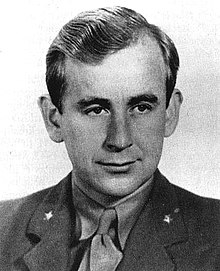
 
 Max Manus ukpd.jpg

Max Manus (1914-1996)

*****


Friday, July 10, 2020

Vidkun Quisling (1988)


Vidkun Quisling: A life, a Trial is the English title of a documentary miniseries with four episodes which premiered on Norwegian television (NRK) in 1988.

Quisling was a Norwegian politician whose name became synonymous with a traitor, because he collaborated with Nazi Germany when this country invaded and occupied Norway during World War Two (1940-1945).

Here is some basic information about this series:

** Original Norwegian title: Vidkun Quisling: Et liv, en rettssak

** Directors: Stein Ørnhøi and Hanne Hoel

** Writers: Stein Ørnhøi and Kristine Ramm

** Historical consultant: Hans Fredrik Dahl (born 1939) – Professor of History at the University of Oslo 1988-2009 – author of the biography Quisling: A Study in Treachery (1999)

** Language: Norwegian – no English subtitles!

** Number of episodes: 4

** Run time: 250 minutes

The series covers Quisling’s life and career from the beginning in 1887 to the end in 1945. This means that we hear about Quisling as a child in the 1890s, as a young man around 1905, when Norway became an independent nation, and as an adult person in the 1920s and the 1930s, before the outbreak of the war. 

A large part of the series is a re-creation of the trial against Quisling which took place in 1945, shortly after the end of the war in Europe.

Significant parts of the trial were re-created with modern actors in the major roles. The dialogue is taken from the transcript of the original trial in 1945.

The cast includes the following

** Finn Kvalem (1934-1990) as Vidkun Quisling (1887-1945) – the defendant

** Odd Furøy (1930-1994) as Erik Solem (1877-1949) – the chief judge

** Erik Hivju as Annaeus Schjødt (1888-1952) – the prosecutor

** Jens Bolling (1915-1992) as Henrik Bergh (1879-1952) – the lawyer for the defence

** Jon Eikemo as Albert Viljam Hagelin (1881-1946) – a Norwegian businessman and politician

** Nils Ole Oftebro as Vilhelm Ullmann (1886-1972) – a childhood friend of Quisling

** Liselotte Holmene (Erik Hivju’s wife) as Maria Quisling (1900-1980) – Quisling’s second wife

As stated above, the series is divided into four parts:

# 1. Prelude – 66 minutes

# 2. Dux, major and member of the government – 76 minutes

# 3. Coup d’etat – 43 minutes

# 4. President of Norway – 65 minutes

In the 1920s, Quisling lived and worked in Soviet Russia or the Soviet Union for several years (1921-1929).

At first, he worked for the Nansen Committee which brought relief to people who were suffering from hunger after the civil war between the Whites and the Reds (1918-1920).

Later, he worked as a diplomat. Before the UK had an embassy in the USSR, British interests in the USSR were represented by Norway. For a while, Quisling was a Norwegian diplomat who represented British interests in the USSR.

During this time Quisling was on the extreme left. He admired communism and the new Soviet state. Later in life he changed his mind and moved to the extreme right. Now he admired Hitler and Nazi Germany.

In the 1930s, Quisling was a member of two Norwegian governments:

** 1931-1932 = minister of defence
** 1932-1933 = minister of defence

In 1933, Quisling founded a political party, the National Union, which was a Norwegian version of the Nazi Party in Germany, but there were two significant differences:

** Quisling’s party was connected to the Christian religion
** Quisling’s party did not want to go after the Jews

The National Union took part in Norwegian elections several times, but never got many votes, only about two per cent of the votes. National Union was never able to win a single seat in the Norwegian parliament.

The series also covers Quisling’s personal life. He was married two times:

** In 1922, he married Alexandra Voronin (1905-1993)
** In 1923, he married Maria Vasilijevna (1900-1980)

It seems he was not divorced from his first wife Alexandra when he married his second wife Maria, so technically he was a bigamist!

Alexandra came to Norway, but later she moved to the US where she died in 1993. Maria came to Norway where she lived until her death in 1980.

On 9 April 1940, Norway was invaded by Nazi Germany. Quisling was ready to work for the Germans. He was hoping to be chosen as the leader of a new government in German-occupied Norway.

But at first, things did not go his way. The Nazi leaders knew that Quisling had limited support in the Norwegian population, so they did not want to appoint him to lead the government of Norway.

Instead a German commissar (Josef Terboven) was chosen to take charge, while Quisling was chosen to be his adviser. But later the Germans changed their minds.

In 1942, Quisling’s dream came true:

He was appointed to head the government of Norway. His party National Union became the government party and the only legal political party in the country. He held this position until the end of the war in May 1945.

What do reviewers say about this series? On IMDb there is no rating and no reviews are listed. I am on my own. What do I say? Here is my opinion:

This series is informative, but not powerful. If you are interested in modern history – in particular the history of World War Two – and if you can understand Norwegian, this series is definitely something for you. It is not great, but it is good. I think it deserves a rating of four stars.

PS # 1. At the end of his trial Quisling was found guilty of treason. The penalty was death. The sentence was appealed to the Supreme Court, where it was upheld. Quisling was executed in October 1945.

PS # 2. Albert Viljam Hagelin, who was Minister of Domestic Affairs in Quisling’s government during the war, was also found guilty of treason in a court of law. He was executed in May 1946.

PS # 3. The miniseries about Quisling is available online on the NRK website. The language is Norwegian. No English subtitles!
 
PS # 4. Quisling: The Final Days is the English title of a Norwegian historical drama which premiered in 2024.

*****

There are more stories about
Norway and World War Two
on my blog:


*****

The Heroes of Telemark is Hollywood’s version of the Norwegian resistance movement. It is only mentioned as an example of historical distortion. Watch this drama to see how often and how much historical truth can be violated.

*****
 
 Norwegian Minister-President Vidkun Quisling in civilian clothes

The infamous Norwegian politician
 
Vidkun Quisling 
 
(1887-1945)

The photo is from ca. 1919

*****