Saturday, February 7, 2015

Longitude: a drama-documentary (1999)


Longitude [DVD]


Longitude is a drama-documentary that was first shown on Britain’s Channel 4 in 1999. Eight years later (2007) it was released on DVD. It is also available online. The total running time is ca. 198 minutes.

The film is based on Dava Sobel’s popular book Longitude, which was published in 1996 (paperback 2005). The book and the film tell the story about the long and difficult search to find the longitude when you are at sea and there is no land in sight.

The drama-documentary is written and directed by Charles Sturridge for Granada TV in the UK and the A & E Network in the US. The most important characters in this story are:

** John Harrison (1693-1776) played by Michael Gambon

** William Harrison (1728-1815) played by Ian Hart

** Nevil Maskelyne (1732-1811) played by Samuel West

** Earl Morton (1702-1768) played by Brian Cox

** Rupert Thomas Gould (1890-1948) played by Jeremy Irons

The most important institution in this story is the Board of Longitude, which was established by an act of the British parliament in 1714. Over the years the composition of the board would change when one member died and was replaced by another. The board had the authority to offer a prize of 20,000 British pounds – a huge fortune at the time – to anyone who could offer a practical and accurate solution to the problem.

Harrison senior was a carpenter by trade and a self-taught clockmaker. At first, clocks were merely a hobby, but later they became his main occupation. Working alone at first and later with his son, this self-taught clockmaker constructed several marine chronometers, which made it possible to determine the longitude at sea with a high degree of accuracy. Today these instruments are known as H-1, H-2, H-3, and H-4.

Two story-lines are intertwined in this film: the first one takes place in the 18th century where we follow the lives of Harrison senior and junior during their quest for perfection. The second one takes place in the 20th century where we follow the life of Rupert Gould (1890-1948), a former naval officer, who restored Harrison’s clocks during the years between World War One and World War Two.

THE PROBLEM:
HOW TO ESTABLISH YOUR POSITION AT SEA
Latitude refers to your position in relation to north and south, i.e. up or down on a map where north is up. It is relatively easy to establish the latitude. At 12 o’clock noon, when the sun reaches its highest point, the sailor must measure the angle between the horizon and the sun. On the equator, the angle will be 90 degrees. The further north (or south) he is, the smaller the angle will be. The angle will reveal the latitude. Hopefully, the sailor knows if he is in the northern or the southern hemisphere. The angle cannot tell him this!

Longitude refers to your position in relation to east and west, i.e. left or right on a map where north is up. Until the 18th century it was impossible to establish the longitude at sea with any kind of accuracy when no land was in sight.

In order to know your position you need to know the exact time in two different locations - (1) your home port and (2) your current position – and then compare them with each other. The difference will reveal the longitude.

The earth revolves around itself in 24 hours, i.e. 360 degrees in 24 hours. 360 divided by 24 = 15. So 1 hour corresponds to 15 degrees longitude. Let us say the sailor has a watch that is set to London time (Greenwich Mean Time, defined as longitude zero). And let us say he leaves England sailing west into the Atlantic Ocean. When the sun reaches its highest point, he knows it is 12 o’clock noon at his current position. Now he must check the watch. If it says 1 pm, his longitude is 15 degrees west. If it says 2 pm, his longitude is 30 degrees west, and so on.

However, until the 18th century no clock existed which could be used on a ship. Clocks were based on a pendulum and a firm foundation. If the pendulum is disturbed, the clock is no longer accurate. A ship at sea will rock and roll. And a pendulum cannot work. A new kind of clock was needed. Harrison wished to build this clock and he did it.

THE BACKGROUND:
THE DISASTER OF 1707
With no way to establish longitude with any accuracy, the captains of the ships that sailed the high seas were in way sailing with a blindfold. Accidents could happen, and they did. In October 1707 a British fleet was returning to England, but the admiral did not know his exact position. He thought he was in one place, but as it turned out, he was in another, and suddenly disaster struck: the fleet hit the Isles of Scilly, a small group of islands southwest of Cornwall. Four ships and thousands of sailors were lost in a matter of hours.

This event was one of the worst maritime disasters in the history of the British navy and to make it even worse it happened in their own waters. Seven years after this episode (1714), Parliament established the Board of Longitude which had the authority to award the prize of 20,000 British pounds to anyone who could offer a practical solution to the problem. Harrison wished to win this prize. So did Maskelyne, although he had a different approach (see below).

HARRISON AND THE BOARD OF LONGITUDE
Longitude is a great film. We follow Harrison in his quest. We learn how he identifies and solves the practical and technical problems step by step. We also learn how the Board of Longitude repeatedly refuses to offer Harrison the prize, even when it is clear to us (the viewers) that he deserves it because he has fulfilled the conditions demanded by the act of 1714.

Why did the board refuse him? Most members were not merely academic scholars, but also arrogant snobs, who could not accept that a self-taught clockmaker from a small town had discovered the solution to a difficult scientific problem.

At the time, many scholars believed the solution would be found by studying the moon and the stars. One proponent of this view was Maskelyne, Harrison’s rival and the devil in this drama.

Maskelyne did lunar observations on Barbados in 1764, and hoped to win the prize using this method. In the following year (1765) he was appointed as Astronomer Royal. In this capacity he became a member of the Board of Longitude. He had a conflict of interest. He wanted to win the prize. At the same time he was a member of the board which had the authority to award the prize he wanted. He should have recused himself from the board or abandoned the attempt to win the prize, but he did neither.

As an influential member of the board he made sure that the board issued a negative report about H-4 and set up several new conditions which Harrison had to fulfil if he wanted to remain in the race. It seems every time Harrison fulfilled one condition, the board would come up with two new demands. With this board, there was no way he could win.

H-1, a huge and heavy clock, was tested at sea during a voyage to Lisbon in 1736. Harrison senior went on this voyage during which his clock performed no so well going out, but quite well going back. Much better than Harrison himself, who was seasick all the time!

H-2 and H-3 were next, but they were never tested at sea. Harrison discovered a problem with them. So he moved on to the next project.

H-4, a handy pocket watch, was tested at sea during a voyage to Jamaica in 1761. Harrison junior went on this voyage during which the watch performed extremely well. But when he returned to England, the Board was still not satisfied. Another test at sea was needed.

H-4 was tested at sea again, this time during a voyage to Barbados in 1764. Harrison junior also went on this voyage during which the watch performed extremely well again.

However, the board still refused to recognise the quality of Harrison’s instrument. It was frustrating. In 1772, Harrison senior and junior tried a new approach. They appealed to King George III, who took an interest in the case. When father and son were granted an audience, the king was very sympathetic to their case.

In the end, Harrison got the money and the honour, but only because Parliament enacted a special law in 1773. The Board never gave it to him or anyone else, for that matter. Fortunately, Harrison senior lived long enough to see the happy end, but he had to wait for many years to see it.

John Harrison was a remarkable man. In the film, he knows how to express himself. Perhaps the film makes him more eloquent than he was in real life. It seems he was not always clear when he had to explain his case, but one thing is certain: he understood his metier extremely well. His persistence with the clocks and his patience with the board is impressive.

William Harrison supported his father through it all, not only by undertaking the two long voyages at sea, but also by attending numerous meetings with the cantankerous Board of Longitude.

The story of Harrison and the longitude is interesting and dramatic. It is also important because it reveals the prejudice which many academic scholars had against a layman such as Harrison. For them it was not important to find the best solution as soon as possible. For them it was important that a solution should come from one of their peers. Harrison was rebuffed time and again in many different ways. Most men would have given up, when treated like that, but Harrison was not most men. He believed a clock was a good solution and he was right. He believed he could build a clock that was accurate enough and he was right again.

Rupert Thomas Gould was a remarkable man as well, but he did not have an easy life, as we can see in this film. When his career in the navy ended, because of a nervous breakdown, he took an interest in Harrison’s old clocks and began to restore them. At first it was merely a hobby, but later it became an obsession.

He was a meticulous person. He could not let it go. He had to do this, for the science and for Harrison’s memory, but in the process he lost his job, his family, and his home. Towards the end of his short life it seems he did find some kind of balance. He became a science educator. In the film we see him giving a talk on the BBC radio program Children’s Hour.

A COMPARISON
It is obvious to compare Longitude with another documentary that is based on Dava Sobel’s book from 1996: Lost at Sea: The Search for Longitude was first broadcast on PBS in 1998. Ten years later (2008) it was released on DVD. It is also available online.

One obvious difference between the two films is the length: one is much shorter than the other. Lost at Sea runs for less than one hour (54 minutes), while Longitude runs for more than three hours (198 minutes).

Another difference is format and structure. Lost at Sea is a traditional documentary in which modern experts appear as witnesses from time to time, while Longitude is dramatized from the beginning to the end. This is one reason why it was a very expensive production. If you ask me, the actors play their roles very well.

Michael Gambon is convincing as Harrison senior, and so is Ian Hart as Harrison junior. Nevil Maskelyne is the devil in disguise, and Samuel West does a good job with this pompous character. Another devil in disguise is Lord Morton, the 14th Earl of Morton, who was a member of the Board of Longitude for many years. Brian Cox does a good job with this unpleasant character.

Jeremy Irons portrays Rupert Gould - the meticulous scholar, who had a difficult life - and he does so very well.

When I compare these two documentaries, I have to say that Lost at Sea is good, but Longitude is great. In other words, the former deserves a rating of four stars, while the latter deserves a rating of five stars.

PS. For more information, see the following books:

** Time Restored: The Harrison Timekeepers and R. T. Gould by Jonathan Betts (2011)

** Finding Longitude by Richard Dunn & Rebekah Higgitt (2014)

** Maskelyne: Astronomer Royal edited by Rebekah Higgitt (2014)

***

Longitude,
A drama-documentary, written and directed by Charles Sturridge,
First aired on television 1999, released on DVD 2007,
Total running time: 198 minutes

***


Friday, February 6, 2015

Finding Longitude by R. Dunn & R. Higgitt (2014)


Product Details image


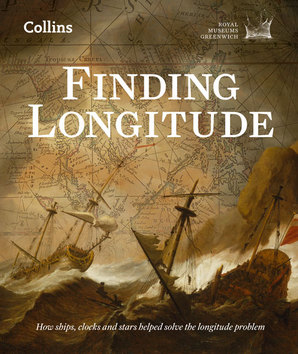
Finding Longitude by Richard Dunn and Rebekah Higgitt was published in 2014 by Collins, an imprint of Harper Collins Publishers, in association with Royal Museums Greenwich. This hardcover book, published in a large format (ca. 23 x 27 cm), is the official companion to “Ships, Clocks & Stars: The Quest for Longitude,” a major touring exhibition organised by the National Maritime Museum.

First a brief presentation of the authors:

** Richard Dunn, Senior Curator and Head of Science and Technology at Royal Museums Greenwich

** Rebekah Higgitt, Lecturer in History of Science at the University of Kent and former Curator of History of Science and Technology at Royal Museums Greenwich; she is also the editor of Maskelyne (2014)

Next a general presentation of the book:

It begins with a prologue and ends with an epilogue. The main text in between is divided into seven chapters, which follow a chronological line from the 15th to the 19th century. Here are the chapter headings:

# 1. THE PROBLEM

# 2. THE CONTENDERS

# 3. ON TRIAL

# 4. MAKING LONGITUDE WORK

# 5. WORKING AT SEA

# 6. COMMERCE AND CREATIVITY

# 7. DEFINING THE WORLD

In each chapter the text is divided into shorter sections by subheadings, which is very user-friendly.

At the end of the book there are notes with references and picture credits. In addition we have a bibliography and an index. The bibliography is divided into two parts. Part one, a bibliographical essay, is divided into two sections: (a) primary sources and (b) further reading. Part two is divided into seven sections, one for each chapter, listing five or more books which are relevant for each chapter. This arrangement is very user-friendly.

The book is lavishly illustrated with portraits of the most important individuals mentioned, pictures of their inventions, and maps of different parts of the world. All illustrations are in colour (unless, of course, the original is in black-and-white). Text and illustrations are closely connected. All illustrations are mentioned in the text and placed where they are relevant, opposite the text or near the text, which is very user-friendly.

HEROES AND VILLAINS
Many characters are mentioned in this book, most of them only once or twice. A few are mentioned several times, because they play an important role in the story. Three of them are John Harrison (1693-1776), a carpenter and a self-taught watchmaker; William Harrison (1728-1815), his son and assistant; and Nevil Maskelyne (1732-1811), an astronomer.

The most important institution is the Board of Longitude which was established by an act of the British parliament in 1714. The board had the authority to award a substantial prize to anyone who could devise a method to find the longitude at sea. The method must be accurate as well as practical. The board could also offer economic assistance to anyone who had presented a promising suggestion in order to help this person improve and complete his project. After more than a hundred years of service, the board was disbanded in 1828.

The story of John Harrison and his dealings with the Board of Longitude during several decades of the 18th century is covered in Dava Sobel’s popular book Longitude that was published in 1996 (paperback 2005). It is also the topic of two documentary films produced for television: the first is called Lost at Sea: The Search for Longitude (1998), while the second has the same title as the book, Longitude (1999).

In Sobel’s book as well as the two documentaries based on her book, Harrison is the hero, while the Board of Longitude and Maskelyne in particular are the villains. Dunn and Higgitt do not follow this line. They try to be more neutral (see below). In addition, they make sure that the story of Harrison is placed in a historical context.

The background is covered in chapters 1 and 2. Here we have the early attempts to discover longitude at sea from the 15th to the 17th century. The story of Harrison and his timekeepers is covered in chapters 3 and 4, while the time after Harrison is covered in chapters 5-7. During the 19th century the instruments as well as the methods were refined and improved. Many parts of the world were explored which produced more accurate maps and charts. The epilogue brings the storyline up to the present day where we can find our global position using GPS.

WHAT DO THE REVIEWERS SAY?
Finding Longitude has received many positive reviews. On Amazon UK there are already more than a dozen reviews. Most offer five stars, while two offer four. So far there is no review with a lower rating than four stars. I can understand why. The book is an easy read – technical matters are explained quite well – and it is lavishly illustrated. However, I am disappointed to notice that many reviews are extremely short. Apart from a positive verdict there is almost nothing else. No arguments, no reasons for the high rating. Here are a few examples:

** “An excellent book.”
** “Interesting book.”
** “Great book.”
** “Good read.”
** “Brilliant.”
** “Fine”

One review does not even contain a single word. It merely says: “a1.”

Looking through the reviews, I am surprised to see that there is not a single critical word anywhere. Is this feast of positive adjectives really justified? Have Dunn and Higgitt created the perfect book without a single flaw? If you ask me, the answer is no. The positive adjectives are not misplaced, it is a beautiful book, but not everything in it is as good as it should be.

TWO MINOR FLAWS
First I will mention two minor flaws in chapter 1.

On page 19, we are told “crews had a one in ten chance of dying during the voyages.” The word “chance” is wrong, because it is a positive word. It refers to something that we hope for or wish for. When we talk about something we do not wish for, we must use the word “risk.” And this is the word that Dunn and Higgitt should have used here.

On page 20, the authors write: “1º of longitude on the Earth’s surface is almost the same length as 1º of latitude at the Equator, but diminishes to nothing at the poles.” When they put it like this, the reader must think that the longitude diminishes, which is false, because all longitudes have the same length. Two words are missing here. The end of the sentence should read: “… but the latitude diminishes to nothing at the poles.”

THE MAJOR FLAW
Having pointed out these minor flaws, I will turn to the major flaw of this book: the attitude which the authors have towards the Harrisons on one side and towards the Board of Longitude and Maskelyne on the other side.

Dunn and Higgitt do not follow Sobel when she portrays Harrison as the hero and Maskelyne as the villain. As I stated above, they try to be more neutral, perhaps because they are scholars. But it is more than this. They are not only neutral. They bend over backwards in their defence of Maskelyne and the Board of Longitude. And they are so afraid of making Harrison the hero that they almost make him the villain.

Around 1700 many scholars thought that a solution would come from one of their peers. Furthermore, they thought that a solution would be found in the stars. They did not have much faith in using a marine timekeeper. A case in point is Isaac Newton (1642-1727), the famous scientist, who was also the first chairman of the Board of Longitude.

Dunn and Higgitt admit as much in chapter 3 (pp. 70 and 72) when they quote a statement by Newton in which he insists that astronomy is the only way to go:

“I have told you [more] than once that it is not to be found by Clock-work alone… Nothing but astronomy is sufficient for this purpose.”

As it turned out, Newton was wrong. Astronomy was important, but it was not the only way to go. A marine timekeeper could also do the job, and the man who produced the first reliable product was not an academic, but a self-taught watchmaker.


John Harrison Uhrmacher.jpg

This picture of John Harrison (1693-1776) is borrowed from Wikipedia.

Harrison’s watch (known as H4) was tested at sea during a voyage to Barbados in 1764. William Harrison went on this journey because his father was too old at the time. On page 101 Dunn and Higgitt tell us what happened when Harrison arrived at Barbados and met Maskelyne there. They offer the following quote from Harrison’s later account:

“he was told that Mr. Maskelyne was a Candidate for the Premium for discovering the Latitude and therefore they thought it was very odd, that he should be sent to make the Observations to Judge another Scheme Mr. Maskelyne having declared in a very Public manner that he had found the Longitude himself.”

Maskelyne had a conflict of interest. But the authors simply deny this fact. They say “it is worth noting that Harrison junior was hardly an objective advocate for his father.” This is true, but it does not mean that what he says is false. They also say there is “no evidence that the young astronomer sought a reward.” Which means they simply discount the evidence presented by Harrison junior.

In the following year (1765) Maskelyne was appointed Astronomer Royal which means that he automatically became a member of the Board of Longitude. Again he had a conflict of interest. He should have recused himself. But he did not. Instead he used his position to make sure that the board kept refusing Harrison when he applied for the reward. This fact is ignored by the authors.

According to the act of Longitude of 1714 the applicant must offer a method which is accurate and practical. Harrison had done this with his watch H4. How could the board refuse him after the watch had been tested at sea and performed well during a voyage to Jamaica in 1761 and again during the voyage to Barbados in 1764?

The board decided to give the original act a new interpretation. They said, in effect: “You have made only one watch, it took you twenty years to make it and it is very expensive. This is not good enough. You must show us how to make a thousand watches in a short time and they must be cheap!”

This was a clever trick to avoid giving Harrison the prize. This new interpretation of the act was completely unfair, but this fact is not pointed out by the authors (see in particular pp. 117-121).

BENDING OVER BACKWARDS
On page 122 Dunn and Higgitt write:

“Many have argued that Harrison should have received £20,000 fair and square after the Barbados trial and before the passing of the game-changing 1765 Act.”

Dunn and Higgitt are not among the many who support this argument. Instead they bend over backwards in their defence of the board:

“The question remains: were the Commissioners acting unfairly, being over-conscientious or doing their public duty?”

Did Harrison’s watch offer a method that was accurate and practical? The answer is yes. Did the original act of 1714 demand that the applicant must be able to produce a thousand copies of his instrument quickly and at a cheap price in order to qualify for the prize? The answer is no. This was a new interpretation that was introduced in order to have an excuse to say no to Harrison.

The authors refuse to acknowledge the bias many commissioners had against Harrison. The commissioners were academic scholars. Many of them could not accept that the solution to a difficult scientific problem could come from a self-taught watchmaker from a small provincial town. They realised he had something important to offer and over the years they funded his work several times, but they always refused to offer him the coveted prize.

While defending and protecting Maskelyne from any criticism, they even attempt to paint the Harrisons as the villains of the story. Here is what they say about them on page 122 in the last paragraph of chapter 4:

“Harrison had difficulty expressing himself and his son is widely regarded as having been an unpleasant individual.”

Should Harrison senior be denied the prize because he had difficulty expressing himself? Obviously, the answer is no. Would it not be more relevant to judge him on his merits, i.e. his inventions? Obviously, the answer is yes. Where is the evidence that Harrison junior was an unpleasant individual? No evidence is offered. If some observers felt that Harrison junior’s loyalty to his father made him an unpleasant individual, would this judgement be fair? Obviously, the answer is no. Even if the claim was true – if Harrison junior was indeed an unpleasant individual – would this be a valid reason to disqualify his father’s invention? Obviously, the answer is no.

As you can see from the above, I think I have a strong case when I say this book has a major flaw. It seems the authors were so afraid to make Harrison the hero and Maskelyne the villain that they decided to do the opposite: cast doubt on the achievements of Harrison and at the same time do what they can to protect the reputation of Maskelyne. Because of this major flaw I cannot follow the many reviewers who offer the highest rating. I have to settle for four stars.

PS # 1. Most characters mentioned in this book are men. The authors deserve credit for drawing attention to a female character Mary Edwards who worked as an astronomer – “computer” and “comparer” – for many years until her death in 1815 (pp. 113-114).

PS # 2. The Greenwich Meridian is also known as the International Prime Meridian or zero degree longitude. Every longitude is counted from this point going east or west. How the Greenwich Meridian achieved this status is a long story which is not covered in this book. The Greenwich Meridian is mentioned briefly two times (pp. 20 and 188). 

The Greenwich Meridian was recommended as zero degree latitude during an international conference held in Washington DC in 1884. This conference is mentioned in the last paragraph of chapter 7 (page 221). GPS, the modern system that we use to determine a global position, is mentioned only once, in the epilogue (page 223).

PS # 3. For more information about the Prime Meridian and the 1884 Washington conference, see chapters 5 and 6 of Greenwich Time and the Longitude by Derek Howse (1998).

***

Richard Dunn & Rebekah Higgitt,
Finding Longitude:
How ships, clocks and stars helped solve the longitude problem,
Collins & Royal Museums Greenwich, hardcover 2014, 255 pages

***