Wednesday, August 7, 2019

The Greatest Moment of her Life (2014)


Sternstunde ihres Lebens


The Greatest Moment of Her Life is the English title of a historical and biographical drama which premiered on German television (ARD) in 2014. The main character is the German female politician Elisabeth Selbert who played an important role when the constitution of West Germany was being written (1948-1949). Here is some basic information about this drama:

** Original German title: Sternstunde ihres Lebens
** Director: Erica von Moeller
** Writer: Ulla Ziemann
** Soundtrack: German
** Run time: ca 90 minutes

The cast includes the following:

** Iris Berben as Elisabeth Selbert (1896-1986) – a lawyer and a politician – SDP = the Social Democratic Party
** Anna Maria Mühe as Irma Lankwitz – Elisabeth’s secretary
** Lena Stolze as Frieda Nadig (1897-1970) – a politician – SDP
** Max von Thun as Heinrich Bode – a politician – SDP

** Walter Sittler as Albert Finck (1895-1956) – a politician – CDU = the Christian Democratic Union
** Petra Welteroth as Helene Weber (1881-1962) – a politician – CDU
** Dietrich Mattausch as Konrad Adenauer (1876-1967) – a politician - CDU
** Eleonore Weisgerber as Helene Wessel (1898-1969) – a politician - the Centre Party (Zentrum)

** Maja Schöne as Lore Mertens – Irma’s cousin
** Steffen Will as Kurt Mertens – Lore’s husband
** Rudolf Kowalski as Adam Selbert (1893-1965) – Elisabeth’s husband

POST-WAR GERMANY
In 1945, when World War Two ended, Germany was divided into four occupation zones, one for each of the great powers: the UK, the US, France and the USSR. In 1949, two German states were established: the three western zones were united and turned into West Germany, while the eastern zone was turned into East Germany.

The old capital Berlin, which was located in the middle of the eastern zone, was divided into four sectors, one for each of the great powers. The three western sectors were known as West Berlin, while the eastern sector was known as East Berlin.

In 1949, East Berlin was proclaimed as the capital of East Germany. Strictly speaking, this was a violation of the international treaty about Berlin, but this was what the USSR wanted and the three western powers allowed it to happen.

Since West Berlin was an international area and not a part of West Germany, it could not be the capital of West Germany. The German politicians had to find another place. They chose Bonn, a small town located by the River Rhine.

Before West Germany could become a country, it needed a constitution. This document was written by German politicians in Bonn from 1948 to 1949. Elisabeth Selbert was one of 65 politicians who worked on this document. Different groups worked on different topics. Elisabeth was in a group which focused on basic rights and duties.

THE MAIN CHARACTER
Elisabeth Rohde was born in Kassel in 1896. She grew up there and lived there for most of her life. She came from a poor family. When she was a young woman, she wanted to study, but there was no money to pay for this. Only later, did she get a chance to study.

In 1918 she met her future husband Adam Selbert. They were both members of SPD, the Social Democratic Party. They were married in 1920 and they had two children. In 1930, Elisabeth completed her education as a lawyer. How did this happen? How did she manage to do this?

Her husband Adam was a progressive man who believed that a women had the right to an education. He offered to stay at home and look after the children, while she studied to become a lawyer. Such an offer was quite unusual for the time!

THE HISTORICAL DRAMA
Since this drama is based on a true story, the basic facts are part of the public record. They are not a secret. Therefore I feel free to mention some of them in this review.

While this drama is based on a true story, it is not a documentary film. It is a dramatized version of events. Not everything happened exactly as shown here, but the basic story is true.

The story is set in Germany, beginning in 1948 and ending in 1949. Most scenes are set in Bonn, in a large building with meeting rooms and offices where the politicians are working on the constitution. A few scenes are set in other places, for instance in Adam and Elisabeth’s home in Kassel.

While working in Bonn, Elisabeth has one hope and one dream: she wants the new constitution to include a paragraph which says: 

“Men and women have equal rights.”

This may sound simple, but in Germany of 1948, this was not simple at all. This formulation was regarded by many as being far too radical. Elisabeth was facing a difficult task.

First, she had to convince the members of her own party, the SPD. Next, she had to convince members of the other parties, the Centre Party and the conservative party (CDU). While the first step was not so difficult, the second step was almost impossible.

In fact, her suggestion was defeated. And she almost gave up. But then she decided to fight back. She found a way to convince the other politicians that her suggestion was right. How did she manage to do it? How did she win? I am not going to tell you. If you want to know the answer, watch the drama all the way to the end.

What do reviewers say about this drama? On IMDb it has a rating of 63 per cent which corresponds to 3.2 stars on Amazon. On the German version of Amazon there are at the moment nine reviews of this product. The average rating is 4.4 stars. If you ask me, the former rating is too low, while the latter rating is much more appropriate. Why?

The script is quite good and the actors play their roles well. The story is very interesting and sometimes emotional. In addition, it is based on a true story. There is much to like here.

However, I cannot go all the way to the top. Why not? For two reasons. 

(1) Sometimes the drama is a bit slow. 

(2) There are some historical inaccuracies. Most of them are minor, but one of them cannot be described as minor:

Towards the end of the drama, when CDU politician Konrad Adenauer reads the paragraph for which Elisabeth fought so hard – paragraph 3 section 2 – he does not read the version that was adopted in 1949. He reads a revised version that was introduced in 1994! This mistake is quite surprising, because this paragraph is the main topic of the drama. How could the director and the writer let Adenauer read the wrong version?

I like this drama and I want to give it a good rating, but as you can see there are some flaws here and there. I have to remove one star because of them. Therefore I think it deserves a rating of four stars.

PS # 1. A better and more direct translation of the original German title might be: Her Finest Hour.

PS # 2. The revised version of paragraph 3 section 2 says the German state must ensure that equality between men and women is a fact of life and not just an empty declaration.

PS # 3. Iris Berben (born 1950) is a famous German actress who has starred in numerous movies and television series. Her son Oliver Berben (born 1971) is also in the movie business. He is a producer.

*****


  This stamp was issued by the the 
German Postal Service in 1987.
It is a part of a series about 
women in German history.
Elisabeth Selbert (1896-1986)

*****


Tuesday, August 6, 2019

Clara Immerwahr (2014)


Clara Immerwahr


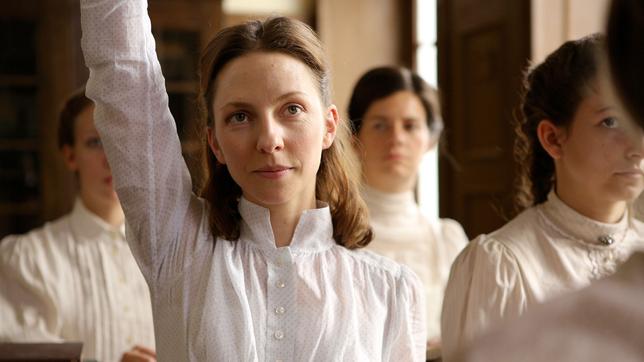
Clara Immerwahr is the title of a historical and biographical drama which premiered on German television (ARD) in 2014. Clara Immerwahr (the main character) was a German scientist and the first woman in Germany to be awarded a doctorate in chemistry. Here is some basic information about this drama:

** Director: Harald Sicheritz
** Writers: Susanne Freund and Burt Weinshanker
** Soundtrack: German – no English subtitles!
** Run time: ca 90 minutes

The cast includes the following:

** Katharina Schüttler as Clara Immerwahr (1870-1915) – a scientist - married to Fritz Haber 1901-1915
** Maximilian Brückner as Fritz Haber (1868-1934) – a scientist – his first wife: Clara Immerwahr 1901-1915 – his second wife: Charlotte Nathan 1917-1927

** Wolf Bachofner as Siegfried Haber – Fritz Haber’s father
** August Zirner as Philipp Immerwahr – Clara’s father
** Peter Simonischek as Rector Engler

** Lucas Gregorowicz as Richard Abegg (1869-1910) – a scientist
** Simon Schwarz as Otto Sackur (1880-1914) – a scientist
** Philip Hochmair as David Sachs – a scientist from Austria
** Martina Ebm as Rosa – a maid who works for Clara and Fritz

GERMANY
In 1870 there was a war between France and Prussia. France was defeated. In 1871 a united Germany was proclaimed. The proclamation was made in the Hall of Mirrors at the Palace of Versailles not far from Paris. This location was chosen to humiliate the French.

Now all German states (except Austria) were united in one German Empire, dominated by Prussia. The Prussian King (Wilhelm I) became the German emperor, while the Prussian Chancellor (Otto von Bismarck) became the German Chancellor.

The new German state was conservative, authoritarian, and militaristic. A man was supposed to get an education, find a job and have a career as a civilian or in the military.

A woman was supposed to get married and have children. She was supposed to be a homemaker. She was not supposed to get an education and certainly not supposed to find a job and have a career.

THE MAIN CHARACTER
Clara Immerwahr was born in a village not far from Breslau in 1870 (the year when France was defeated by Prussia). At the time, Breslau was a German town. Today it is called Wroclaw and it is located in Poland.

Clara’s father was a farmer, but his hobby was chemistry. When he talked to Clara about his hobby, she was interested. Clara did not fit the German tradition. She wanted to learn, she wanted to study.

First, she wanted to get a high-school diploma (in German: Abitur). This was not easy. Girls were not supposed to do this. High schools were for boys. A girl needed a special permission and separate lessons to get a high-school diploma. It was not easy, but Clara got it.

Next, she wanted to study chemistry at the university. This was even more difficult. German universities were only open to men. Women were not allowed to study at a German university. A woman would need a special permission to be considered and the professor must give his permission for the woman to attend his classes. It was not easy, but Clara got it.

In the year 1900, she was awarded a doctorate in chemistry. She was the first woman in Germany to get this degree. Once she had her degree, she wanted to find a job and work in chemistry. This was highly unusual, in fact, this had never happened before. A woman was not supposed to do something like this. She could not get a real job. She might be allowed to work as the assistant of a male chemist.

As a young woman, Clara had met Fritz Haber when he was a student of chemistry. He had proposed to her, but she had turned him down, because she had just been given permission to attend classes at the local University of Breslau. She did not want to give up on this chance just to get married.

In 1901, shortly after her graduation, Clara and Fritz met again. He proposed again and this time she said yes. They were married in the same year. In 1902 they had a son who was named Hermann (probably named after his father’s uncle).

In 1912, Fritz was offered a new position in Berlin and the family moved to the capital. Clara wanted to work after her marriage to Fritz and for a while she did, but once Hermann was born, she did not have time to work. She had to take care of the home and the family, while Fritz had a career. The life as a homemaker was not what Clara had dreamed about. She became more and more frustrated. The marriage was falling apart.

In 1915 Clara committed suicide in the garden outside the family home. Her son Hermann found his mother lying dead on the ground.

For many years, Clara was forgotten by the public. But in the 1970s and the 1980s, she was re-discovered. She was praised as a pioneer, because she had managed to get an education in a Germany where education was reserved for men, and because she was the first women to be awarded a doctorate in chemistry.

She was also described as a pacifist who had opposed the war in 1914 and as an activist for women’s rights. Apparently, there is no evidence for these claims.

She managed to get an academic education and for a while she even worked as a chemist, but she did not have the energy or the time to work as an activist for women’s rights.

When World War One broke out in 1914, her husband began to work for the German army. He used his talents as a chemist to develop poison gas. He was the man behind the first German attack with poison gas at Ypres on 22 April 1915.

Some modern writers claim Clara was shocked when she realized that her husband was developing poison gas. They claim she tried to persuade him to stop this work, because it was morally wrong. She told him a scientist should work for the benefit of the people, and not try to kill people.

Apparently, there is no evidence to support these claims. No evidence shows Clara as a pacifist who was opposed to her husband’s work for the German army. It seems she was remembered as the person people think she should have been, and not as the person she really was.

Why did she kill herself in 1915? There are at least three suggestions:

# 1. For political and moral reasons. Because she was a pacifist; because she was against the war and against the use of poison gas; and because she was unable to stop her husband’s work.

# 2. For personal reasons. The marriage with Fritz was breaking down. She was disappointed that she was no longer allowed to work as a scientist. She was upset that Fritz wanted her to be a homemaker.

# 3. Because she suffered from a depression.

If we look at the evidence, it seems that reason number one is not very likely, while reasons number two and three seem much more likely.

THE HISTORICAL DRAMA
The time frame is 1877-1915. The story begins in 1877 when Clara is only 17 years old. From this point in time, we follow her life, her education and her career until the end of her life in 1915.

Most of what we see in the drama is true. But some historical details have been added or altered. We know she meets Fritz Haber when she is still young. In the drama, she has a minor accident with her bicycle. Fritz happens to be there and he helps her. In the real world, they met each other at a dancing school. I do not know why this detail was altered.

The drama includes a scientist from Austria, David Sachs, who is interested in Clara. Perhaps she is also interested in him. One day he invites her to join him for a ride in a hot air balloon. However, Clara and David are seen together and the news comes back to Fritz who is upset about it. He thinks she is being unfaithful to him. After this, Clara has no more contact with David.

I think David Sachs is a fictional character. I think the episode with the hot air balloon was added to make the story more interesting and create some additional drama.

Clara has a mentor, Professor Richard Abegg, who tries to help Clara with her career. He is not opposed to having a woman in the laboratory. This detail is true. In the drama, we see him several times.

Richard Abegg had a hobby: he was fascinated by gas balloons. When he died in 1910, at the age of 41, it was because his balloon crashed. Perhaps this is why the drama includes an episode with a hot air balloon.

In the drama, we see how Clara is increasingly frustrated: she cannot work as a scientist, because she has to take care of the son Hermann.

At first, Fritz is happy to have a wife who understands his work. But once they are married and once they have a son, he becomes more and more old school. He wants his wife to be a homemaker, to take care of the child and the home. He no longer supports her ambition to work in science. This change of personality is shown in the drama and I think it is realistic.

Towards the end of the drama, Clara is against the war. She writes a pacifist pamphlet which nobody wants to publish, because it will be seen as treason. She tries to persuade Fritz to stop working for the army and she tries to tell him that poison gas is horrible. However, there is no evidence to support these details.

How is the suicide covered in the drama? We see her just before she kills herself. She is writing a letter to her husband explaining why she must end her own life. Perhaps there was such a letter. But if there was, it does not exist anymore. In the drama, Fritz reads the letter and throws it into the fire. The letter burns. Perhaps this is why it does not exist anymore!

What do reviewers say about this drama? On IMDb it has a rating of 63 per cent, which corresponds to 3.2 stars on Amazon. If you ask me, this rating is too harsh. On the other hand, I cannot go all the way to the top, because there are some flaws here and there, especially towards the end where Clara is portrayed as a pacifist who is opposed to the war and her husband’s work for the German army.

I like this drama and I want to give it a good rating, but I have to remove one star because of these flaws. Therefore I think it deserves a rating of four stars.

PS # 1. The following articles are available online:

** Ryan Carty, “Casualty of War,” Distillations (Science History Institute), 5 July 2012

** Justin Huggler, “Germans rediscover First World War heroine in new TV drama,” The Telegraph, 29 May 2014 

** Bretislav Friedrich and Dieter Hoffmann, "Clara Immerwahr: A Life in the Shadow of Fritz Haber," One Hundred Years of Chemical Warfare, 2017

PS # 2. The following biography is available in German: Der Fall Clara Immerwahr by Gerit von Leitner (1993).

PS # 3. Fritz Haber married again in 1917. His second wife was Charlotte Nathan (1889-1976). They were married 1917-1927. Fritz and Charlotte had two children.

PS # 4. In 1918, Fritz Haber was awarded the Nobel Prize in chemistry. During the ceremony, nobody talked about the poison gas he had developed and used during the attack at Ypres on 22 April 1915.

PS # 5. In 1933, when Hitler and the Nazi Party came to power, Haber was in trouble. As the leader of an academic institute, he was told to fire all members of staff who were Jewish. He did not want to do this.

What about himself? Haber was a Jew, who had converted to Christianity long ago, as had his first wife Clara. He could not know if the Nazis would leave him alone or take him as well.

He decided to resign and to leave the country. He left Germany in August 1933. He was invited to England. He accepted the invitation. While he was there, he was invited to go to Palestine. He accepted the invitation, but he never made it. He died in Switzerland in 1934. He was buried there. His first wife Clara had been buried in Berlin in 1915. But in 1937 the remains of Clara were transferred to Basel. They are buried side by side.

PS # 6. Doctor Hope is a historical and biographical drama which premiered in 2009. It is based on the life and career of Hope Bridges Adams-Lehmann (1855-1916), the first female doctor in Germany. Although she obtained her medical diploma in Germany in 1880, she was not acknowledged as a doctor and not permitted to use the title until 1904. In some respects, the story of Hope Bridges is similar to the story of Clara Immerwahr.

*****

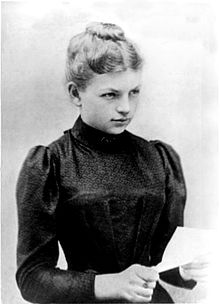
 Clara Immerwahr.jpg

 Clara Immerwahr (1870-1915)

*****


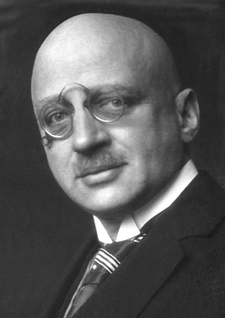
Fritz Haber.png

Fritz Haber (1868-1934)

*****


Left panel Gravestone of Fritz and Clara Haber at the Hörnli Cemetery in Basel. In his testament, Haber expressed his wish to be buried alongside his first wife Clara-in Dahlem if possible, or elsewhere "if impossible or disagreeable." Haber's son Hermann became the will's executor. In accordance with this will, Clara's ashes were reburied beside Fritz Haber's in Basel. Photo: Archiv der Max-Planck-Gesellschaft, Berlin-Dahlem. Right panel Memorial for Clara Haber in the garden of the Fritz Haber Institute, installed in 2006. The photo by one of the authors (BF) shows the memorial at the centenary of Clara's suicide, on May 2, 2015 

On the left: a tombstone for Fritz and Clara in a cemetery in Basel, Switzerland. On the right: a memorial for Clara in the garden of the Fritz Haber Institute, established in 2006.

*****