Monday, August 12, 2013

Theodora (volume one): From Actress to Empress


Theodora: Actress, Empress, Whore


Stella Duffy is a novelist, not a historian, and this book is a work of fiction, as she reminds us in a note at the end of the book. But her account is placed in a historical setting, and many characters – including the main character Theodora, who lived ca. 500-548 – are real persons.

Ancient sources tell us many things about Theodora, but we do always know if they are true or false, and the sources do not tell us everything. There are many gaps in our information. Whenever there is a gap, Duffy can use her imagination to fill the gaps, and in my opinion she has done this very well.

This volume covers the first half of Theodora’s life, from ca. 500 to 527. The story continues in a sequel The Purple Shroud which was published in 2012 and 2013.

We do not know when or where Theodora was born. Duffy says Theodora was born in Constantinople in AD 500, which is possible. Her family was poor and despised by the elite because they worked in the entertainment business. They performed in the hippodrome between the races. Her father was a bear-keeper who worked for the Green faction. It was a dangerous job: when Theodora was five, her father was killed by his bear. Her mother managed to find a new husband, but the Greens refused to hire him. Desperate, the family turned to the Blue faction, which took them in. From that moment, and for the rest of her life, Theodora was a firm supporter of the Blues.

[Her future husband, the emperor Justinian, also supported the Blues. On this point they always saw eye to eye. On other points, in particular the Christian religion, they did not agree: he was (for most of his life) a Chalcedonian, while she was a Monophysite.]

[See Alan Cameron, Circus Factions: Blues and Greens at Rome and Constantinople, 1976, reprinted 1999.]

In 518 Theodora falls for a man called Hecebolus, who had just been appointed governor of the Pentapolis, i.e. Cyrenaica, or the eastern part of Libya. She follows him to Libya and stays with him for a while. At the time the governor of the Pentapolis lived in Apollonia. The remains of the ancient town are still visible on the northern coast of Africa: three churches and a theatre. In the centre of the town the governor’s mansion, also known as the Palace of the Dux.

[See Paul MacKendrick, The North African Stones Speak, hardcover 1980, paperback 1997, pp. 131-136.]

The relationship with Hecebolus does not last long: in 519 Theodora leaves him and travels to Alexandria, where she meets a man called Timothy, who was born ca. 470. Timothy, an anti-Chalcedonian, was the patriarch of Alexandria from 517 until his death in 535.

Timothy sends Theodora into the Egyptian desert, where she meets a man called Severus, who was born ca. 465. Severus, also an anti-Chalcedonian, had been the patriarch of Antioch 512-518, but he had been ousted by Emperor Justin, who wanted to punish him for his “heretic” views. Severus took refuge with Timothy in Egypt. Theodora stays with Severus and his disciples in the desert for about one year.

In 520 she moves to Antioch, where she stays with a women called Macedonia. She returns to Constantinople in the following year.

We do not know how and when Theodora and Justinian met. Duffy says Theodora was hired to work for the Palace and plan the celebrations which were held when Justinian became consul in 521, which is possible.

While working in the Palace, Theodora meets the future general Belisarius and his wife Antonina, who had almost the same background as herself (she had also been an actress). She also meets the emperor Justin and his wife.

Justinian wants to marry Theodora, but it is against the law: a former actress cannot marry a patrician. Justinian asks Justin, who is his uncle, to change the law for him. The emperor wants to help, but the empress will not allow it. She dies in 523, Justin changes the law in 524, and Justinian is finally able to marry Theodora in 525.

The couple is married in Hagia Sophia. According to Duffy (page 297) the church was “one hundred and twenty years old” at the time, but this is not true. The first version of the church was dedicated in 360, but later destroyed. The second version was dedicated in 415, and this is the one that was standing when the marriage took place. At the time it was only 110 years old. It was destroyed during the Nika-rebellion in 532. The third version (Justinian’s church) was dedicated in 537, and this is the one still standing today.

[The dome was seriously damaged by earthquakes in 553 and 557, and collapsed after a third earthquake in 558. A new dome was completed in 562.]

Justin names his nephew Justinian to succeed him on the throne. When Justin dies in 527, Justinian becomes the emperor and his wife Theodora the empress.

Theodora’s life is a fascinating story – from rags to riches, from a poor actress, popular with the people but despised by the elite, to the most important woman in the Byzantine Empire – and Duffy tells it in a fascinating way. The descriptions are colourful, the dialogues powerful: Theodora and the people around her come to life.

The author has done her homework. She knows the characters and understands the issues they were facing.

She also has a good eye for details: on page 246, for instance, we are told that Justin’s wife had changed her name from Lupicina to Euphemia in order to hide the fact that she was born as a slave (which is true).

PS. The map of the Mediterranean world placed at the beginning of the book is useful, but one city (Cyrene) is misplaced and the names of several cities are misspelled.

* * * 
Stella Duffy,
Theodora: Actress, Empress, Whore,
Virago, hardcover 2010, paperback 211, 344 pages
 
* * *


Theodora (volume two): The Purple Shroud


The Purple Shroud


The Purple Shroud (hardcover 2012, paperback 2013) is a sequel to Theodora (hardcover 2010, paperback 2011).

The first volume covers the first half of Theodora’s life. She was born in 500 and grew up in Constantinople as a member of a poor family. After a dramatic journey to Libya, Egypt, and Syria, she returned to Constantinople in 521, where she met Justinian, whose uncle Justin was the emperor of the Byzantine Empire. In 525 she married Justinian. In 527, when he succeeded his uncle on the throne, she became his empress and the most powerful women in the Byzantine Empire.

The second volume covers the second half of Theodora’s life, i.e. her time as empress, from the coronation in 527 until her death in 548.

Both volumes are historical novels, based on a true story: the author can use her imagination to fill the gaps between the historical facts, but she cannot change them or go against them. Unfortunately, this rule is broken more than once.

There are two illustrations: a map of the Mediterranean world and a map of Constantinople. The map of the Mediterranean world has been slightly improved compared with the map in the first volume. A few mistakes have been corrected:

* The distance marker now covers 500 km and 500 miles, instead of only 200 km and 200 miles
* Portus has been changed to Ostia
* Cyrene is now placed inland, and not on the coast

But several mistakes are simply repeated. We still have:

* Cartegena instead of Cartagena
* Teuchita instead of Teuchira
* Trebizond instead of Trapezus
* A dotted line marking the “Roman” Empire instead of the “Byzantine” Empire

I liked the first volume, and I was looking forward to reading the second. My expectations were high. Unfortunately, they were not fulfilled. Let me explain my reasons:

(1) The novel gets off to a rather slow start.

(2) The text is divided into 41 chapters which follow a chronological line, but the author is not consistent. Some time indicators are misplaced, or wrong, revealing that in some cases Duffy lost track of her own chronology. Here are some examples:

** Chapter 2 takes place ten years after Theodora and Justinian met, i.e. we are in 531 and Theodora is 31 (page 17). But in chapter 4 we are told she is 28 and her husband 46, so now we are back in 528 (page 35). The time indicators are wrong: chapter 2 must be in 528, when she is 28, seven years after they met, and chapter 4 must be in 531, when she is 31 and her husband 49.

** Chapter 19 includes the phrase “Theodora, fourteen years fully faithful to Justinian” (page 166), which places the chapter in 535. But this cannot be true, because everything else points to 533: the Nika Revolt of 532 is in the past, while the conquest of Africa, which began in 533, in still in the planning stage. The phrase should be “twelve years fully faithful.”

** Chapter 23 covers the triumph of Belisarius in 534 celebrating the conquest of Africa. On page 205 the author mentions the “treasures the Vandals had taken during the sack of Rome a hundred years earlier.” But the sack of Rome took place in 455, and this is only 79 years before 534.

(3) In chapter 9 Duffy covers the beginning of the Nika Revolt: six suspects were kept in custody: three Greens, three Blues. Two of them were released, while four were sentenced to death. Two Greens, two Blues. Two were hanged, and two survived, because the trapdoor did not open (page 77-85).

Her version contradicts several modern accounts which are based on the ancient evidence: seven suspects were sentenced to death, four were to be beheaded and three to be hanged. One was hanged, but two survived, one Green and one Blue, because the rope broke and they fell to the ground, still alive.

** J. B. Bury, History of the Later Roman Empire, 1923, reprinted 1958, vol. 2, page 40

** William Rosen, Justinian’s Flea, 2007, page 92

** James Allan Evans, The Power game in Byzantium, 2011, page 74.

(4) In chapter 3 we are in 530. A petitioner comes before Theodora. He says his name is Stephen and that they have met before. After a while the empress remembers that they met briefly in Alexandria many years before (ca. 519).

The meeting in Alexandria is described in the first volume, Theodora, pp. 142-143.

Stephen, who is an artist, says: “I want to create the mosaics for the new church in Ravenna.”

Theodora says the work has just begun, and it will be many years before anyone can start to work on interior decorations. The artist is prepared to wait, but he wants to have the contract and the imperial seal of permission. When the audience is over, Theodora grants him his wish.

While the meeting is possible, the conversation is not. The church in question is San Vitale. There are two famous mosaics in the apse: on the left Justinian and his court, on the right Theodora and her court. When work on the church began, in 525 or 526, Italy was still ruled by the Goths. The conquest of Italy began in 535. Belisarius entered Ravenna in 540, and the church was completed by the Byzantines in 547 or 548, but Theodora could not know anything about this in 530.

Theodora mentions the Goths in her response, but she does not say that they are in control of Italy. She accuses them of making a “fuss.” Her response does not make any sense.

The war against the Goths is mentioned in later chapters. Duffy knows Italy was ruled by the Goths for many years, but in chapter 3 she chooses to ignore this inconvenient fact.

While Stephen’s conversation is brief, it is a key element in the overall structure of the book. The artist appears again in chapter 41 (the last chapter of the book) where he is completing the mosaics in the church in Ravenna: “Theodora taking shape.”

It is a wonderful idea: the mosaics in San Vitale are made by an artist, who met Theodora in 519, and who received her personal permission to do the work in 530. But it does not fit the historical facts. What we have is an anachronism.

(5) Peter Barsymes, a trader from Syria, who worked with Justinian and Theodora, is mentioned several times. He wants to break the Chinese monopoly on silk production. In chapter 40 we are told he succeeded, when he hands a sample of silk made in Constantinople to the empress who is dying from cancer. When Theodora dies, her body is covered by purple silk: “the City’s silk for the City’s Empress.”

This version goes against several modern accounts which are based on the ancient evidence. John Julius Norwich (1997) says silk production in the Byzantine Empire began in 552-553. John Peter Wild (2003) says 552-554. Patrick Hunt (2011) says 552-563. They all say production began several years the death of Theodora in 548. What we have here is another anachronism.

I can add some minor flaws:

(A) On page 184 we meet a person whose first name is Jacob. His last name is mentioned two times on this page, the first time he is called Baradeus, the second time Baradaeus. Which one is it? The first version Baradeus appears again on page 259, while the second version Baradaeus appears again on pp. 235, 294 and 341. The latter version is correct: Jacobus Baradaeus was born ca. 505 – he was five years younger than Theodora - and served as the Bishop of Edessa from 543 until his death in 578.

(B) One page 184 Duffy says: “Timothy, who’d known the preacher in their youth…”
It should be “in his youth.”

(C) On page 248 Duffy says: “They were Justinian…”
It should be “He was Justinian.”

(D) In the acknowledgements before page 1 Duffy says: “Gratitude, as always, to my wife Shelley Silas.” As a female writer Duffy may have a female partner, but she cannot have a wife. Only a man can have a wife. But change is on the way: same sex marriage became law in England and Wales in July 2013. BBC News reported on 17 July 2013: “It is expected that the first gay and lesbian wedding ceremonies will take place by summer next year [2014].”

As far as I can see, these flaws are not mentioned or discussed by other reviewers. Perhaps because they decided to ignore them. Perhaps because they failed to notice them. Taken one by one, the flaws may seem minor. Taken together, they become a serious problem. While there are some good parts in this book, they are spoiled by the bad parts where Duffy changes historical facts in order to suit her vivid imagination.

My overall impression is a feeling of disappointment: the second volume is a bit longer than the first, but only half as good.

* * *
 
Stella Duffy,
The Purple Shroud,
Virago,  hardcover 2012, paperback 2013, 390 pages
 
* * *


Sunday, August 11, 2013

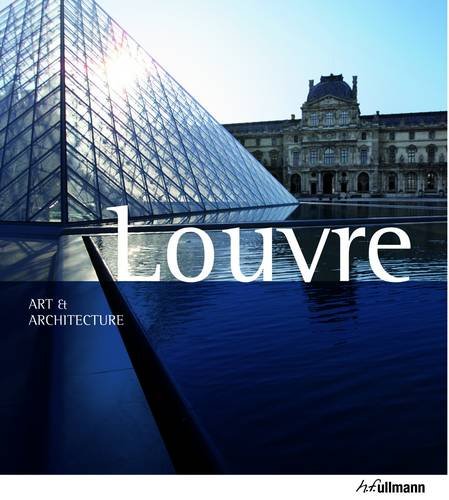
The Louvre


The Louvre is one of the greatest and most famous museums in the world. It has around five million visitors a year. According to Lonely Planet’s guidebook about France, some people decide to stay away from this place, because it is too big:

The Louvre may be the most actively avoided museum in the world. Daunted by the richness and sheer size of the place (the side facing the Seine is some 700 meters long and it is said it would take nine months just to glance at every piece of art here), both local people and visitors often find the prospect of an afternoon at a smaller museum more inviting.”

[Nicola Williams and others, France, Lonely Planet, 7th edition, 2007, page 126]

I understand the point. The Louvre is incredibly big. It is easy to get lost in there, even if you have a floor plan and you try to follow the signs posted on the walls. But the answer is not to avoid it. If you do, you will miss out. You will never see any of the treasures they have in there. The solution is to prepare your visit, to make a choice. Find out which fraction of the huge collections you want to see, and then go for it – ignoring everything else.

How to prepare for a visit? My answer is to use the guidebook entitled The Louvre, written by two German authors, Gabriele Bartz and Eberhard König, and published by the German publishing house Könemann (replaced first byTandem Verlag and later by by H. F. Ullmann Verlag). It is a volume in the popular series called “Art & Architecture.”
 
The book opens with a historical introduction explaining how the Louvre was built and how it came to be one of the greatest museums in the world.

The main section of the book is a presentation of the most important items of the four main departments of the museum:

* Antiquities
* Sculptures
* Paintings
* Decorative Arts

Each department comprises several collections. The department of paintings, for instance, has an Italian, a Spanish, a French, an English and a Dutch collection. The department of antiquities has an Egyptian collection; a Greek, Roman and Etruscan collection; and an Oriental collection including Assyrian, Babylonian and Persian items.

The book concludes with an appendix where you find a glossary, a timeline, a bibliography, brief biographies of the artists mentioned, and an index of the works of art mentioned.

The book is illustrated from the beginning to the end. There are more than 600 colour illustrations, pictorial maps and floor plans.

Scattered throughout the book there are more than ten short sidebars on more general topics. The sidebars are printed on green pages and are sometimes written by “a guest writer.”

The Louvre is a museum of art, as Bartz and König explain on page 44:

The museum still does not devote itself to everyday things, but sees itself as a treasure house of arts and crafts, even if it does exhibit a few objects from everyday life of submerged cultures alongside those that were created specifically as art, or are regarded today as works of art.”

Although its collections are huge, The Louvre does not cover the whole world. In fact, as Bertz and König point out, the perspective is quite limited: France, Western Europe and the Mediterranean world including ”the fertile crescent” which stretches from the Egyptian Nile over the land of two rivers (Mesopotamia) to the Persian Gulf. 

Bartz and König do not present every item in the museum. For each department, for each collection, they present the most important items. When you prepare your visit, you can see a picture of your chosen item and read a brief description about it. But not only that: using the floorplans, you can also find out where your chosen item is placed. Once you get to the museum, you will know exactly where to go: what wing, what floor and what room. In this way this book is extremely useful. It is handy, too. The size is so small you can take it with you when you visit the museum.

I like this book, but I have to mention a few minor flaws:

(1) On page 21, the authors explain that the north wing is named after Cardinal Richelieu (1585-1642) and that the south wing is named after Dominique-Vivant Denon (1747-1825) who was appointed director of the museum by Napoleon. But what about the east wing, the Sully wing? What is the origin of this name? They never tell us. It is named after Maurice de Sully, who was a bishop in Paris around 1200 and responsible for the construction of the Notre Dame Cathedral.

(2) François Mitterrand, president of France 1981-1995, is mentioned several times. When his name appears in the text, it is always spelled correctly, with a double R (pages 28, 30, 31).  But when it appears in a caption, it is always misspelled, with a single R (pages 29 and 30). Why?

(3) On pages 52-53, the authors present The Louvre in a nutshell.” Here they tell us when the museum closes, which is good to know, but they forget to tell us what time it opens. The answer is 9 am.

(4) They also fail to tell us that there is free access to the museum on the first Sunday of every month. Many people seem to know this. When I was there on a Sunday, it was very crowded. When I returned the next day, the situation was quite different: I almost had the whole place to myself.

* * *
Gabriele Bartz & Eberhard König,
The Louvre,
Könemann, replaced by Tandem, replaced by H. F. Ullmann,
Hardcover, 2005, Paperback 2013, 626 pages

* * *
    
 
* * *
 
  REFERENCE
 
A Tour of the Louvre
 
A documentary film which premiered in 2021
 
In 2023, it was shown on French and German television (arte)
 
(Run time: 95 minutes)
 
 
***


Friday, August 9, 2013

Hadrian: Empire and Conflict


Hadrian: Empire and Conflict

This beautiful and informative book is written by Thorsten Opper, who works for the British Museum. It is lavishly illustrated. It gives a thorough treatment of several important topics concerning Hadrian and his role as emperor.

Opper is (in most cases) a careful author, regarding the general view and the detail. However, I must make a small reservation. Even if this book is written by a specialist, and even if it is published by one of the biggest and most famous museums in the world, there are mistakes here, in most cases silly mistakes which the author (or the publisher) easily could have avoided by checking the text just one more time. Here are some examples:

** The notes and the bibliography do not match each other completely: note 12 on page 237 (left column) refers to "Højte (2005)." But this author is not listed in the bibliography. Who is this person? It is the Danish archaeologist Jakob Munk Højte, whose book Roman Imperial Statue Bases was published in 2005.

** Note 31 on page 242 refers to "Spyropoulos (2006)." But this author is not listed in the bibliography either. Who is this person? It is the Greek archaeologist Giorgios Spyropoulos, whose full name is given in Opper's preface (page 11).

** In connection with the notes, I have to correct a small mistake: note 9 on page 236 claims Constantine the Great transferred the capital from Rome to Byzantium in AD 324. The correct date is AD 330. Constantine announced his plans for a new city in AD 324, but the new city was not dedicated until AD 330. Apparently, Opper got the two events mixed up.

In the text there are factual errors. Opper claims:

(1) Nerva died in AD 97 (page 44). The correct date is AD 98. We find it on page 12 and again (indirectly) on page 211.

(2) The Jewish uprising in North Africa began in AD 116 (page 65). The correct date is AD 115. We find it on page 129.

(3) The Roman conquest of Jerusalem and the destruction of the Jewish temple took place in AD 71 (page 90). The correct date is AD 70.

(4) Hadrian's Villa (near Tivoli ca. 30 km east of Rome) covers some 40 km (page 138). But 40 km is a distance, not an area. He wants to say 40 square km (or 40 hectares). The correct formulation appears on page 132.

In addition, I have to mention one small point concerning the section about the Jewish uprising in Judaea (AD 132-135). In this section (pages 89-93) Opper mentions four Roman officers who played an important part in this conflict, but he does not mention Quintus Lollius Urbicus who also played an important role in this conflict.

Quintus Lollius Urbicus was born in the ancient town Castellum Tidditanorum (today Tiddis) in present-day Algeria, and he had a spectacular career. After the Jewish uprising he was governor of Germania Inferior (135-138) and governor of Britannia (138-144). He travelled all over the empire, but he returned to his home town to die. The family mausoleum can still be seen today, four km north of the ancient town.

Why is he not mentioned?

Having said something negative, I would like to add something positive. It is not difficult at all. I will mention three cases which show how Opper, in a very professional way, uses different types of archaeological material to support his account.

* The first case is Monte Testaccio, a man-made mountain of amphora sherds in Rome, which makes a direct connection between the Roman capital and Baetica in south-western Spain, where Hadrian's family (Aelius) came from (pages 36-41).

* The second case is a statue discovered in 1861 in the Temple of Apollo in Cyrene in present-day Libya, which is now in the British Museum. It shows Hadrian dressed as a Greek, but a recent examination of the statue proved that the statue is a hoax: the Roman head does not fit the Greek body (pages 66-72).

* The third case is the decorations of Hadrian's Villa. Examinating floors and walls in different buildings, archaeologists have identified three levels: The top level was for the emperor and his family, the middle level was for high-ranking personnel and distinguished guests, while the low level was for the servants - mostly slaves (pages 144-148).

These (and many other) cases demonstrate that Opper is careful with regard to argumentation and documentation. That is exactly why it is so sad and so puzzling that his book should contain the silly mistakes mentioned earlier.

Text and illustrations support and complement each other perfectly. The text is well-written. It is based on archaeological material, ancient written sources and modern research in the field. The illustrations are absolutely fabulous: high quality pictures in a large format (23 x 28.5 cm).

There are many different perceptions of Hadrian, in part because he wears many different hats. We have the private person and the builder, as well as the military commander and the emperor. But each of these four characters acts in different ways, which is the basis for the different perceptions of this person.

In his preface, Opper explains that his own view of Hadrian changed a good deal while he was working on the book. The last five lines of his preface may provide a fitting conclusion to my review of his book:

My own picture of Hadrian has changed a great deal during the past few months: while he was certainly a much darker character than commonly thought and only too human, one cannot but admire the incredible stamina and foresight with which he organised the Roman empire and helped to shape the world we live in today.”

* * *
 
Thorsten Opper,
Hadrian: Empire and Conflict,
British Museum Press, London, 2008, 256 pages
 
* * *


Thursday, August 8, 2013

Hadrian's Speeches to the African Army


This book is written by a German scholar (Michael P. Speidel) and published by a German publisher (RGZM or Römisch-Germanisches Zentralmuseum), but the text is in English. It is not a biography of Hadrian. It is an academic treatise in which the author tries to reconstruct a long Latin inscription which is only partially preserved. Let me explain:

In AD 128 the Roman Emperor Hadrian travelled to Africa. On or around 1 July he visited the military camp in Lambaesis (today this place is called Lambeze-Tazoult, and it is in Algeria). He addressed the soldiers of the third legion (in Latin: Legio III Augusta) and the auxiliary units attached to the legion. The Latin word for the emperor’s address to the troops is adlocutio.

Hadrian’s speeches were carved in stone to be preserved for posterity. The text was carved on the corner pillars of a viewing platform (or tribunal) placed in the middle of a parade and exercise ground located two kilometres west of the camp. The parade ground – sometimes erroneously referred to as “the western camp” - is a square area which measures 200 x 200 meters. On page 4 Speidel writes about the platform:

“A square base about two meters high with sides four-and-a-half meters long, the viewing platform was topped by a Corinthian column, nine meters tall, perhaps crowned by a statue of Hadrian.”

Maybe Hadrian was standing on this platform when he addressed the troops.

Each corner pillar consisted of four marble blocks. So the total number of blocks was 16. Each block was inscribed on the two sides facing outward. So the whole text covered 32 fields. On page 21 Speidel explains the layout of the text:

“The numbering runs from top to bottom, proceeding toward the right around the monument [i.e. counter-clockwise], hence fields 1-8 are on the east side, 9-16 on the north, 17-24 on the west, and 25-32 on the south.”

After the fall of Roman Africa, the column crashed and the platform crumbled. But when the French arrived around 1850, parts of the column were still lying on the ground, and the platform was still visible. During the following years stone thieves removed much of the marble. But some parts of the monument still survive. On page 5 Speidel explains what remains:

“Today both platform and column are gone; yet four of the sixteen inscribed blocks survive, as do over a hundred small fragments: enough to recover a good part of Hadrian’s speeches.”

For fifty years the stones have been in Algiers, but not on display in a museum, in a storage room. For some reason the Algerian authorities do not want to give scholars access to them. Therefore this work is based on photos which were taken and drawings which were made more than fifty years ago. On page 24 Speidel writes:

“It will be a good day for the study of classical antiquity and world military history when Algerians come to see their country’s past as a source of pride, and when they will see students of these stones as scholars shedding light on their history.”

One chapter (pp. 7-20) is called “Text and translation.” This chapter is divided into three parts: (a) dedication; (b) the legion, fields 1-16; and (c) the auxiliary units, fields 17-32. Here we have the whole text – the Latin original and an English translation – as far as is possible.

Another chapter (pp. 25-87) is called “Restoring the text and its meaning.” This chapter is divided into four parts: (a) the dedication; (b) the legion; (c) the auxiliary units; and (d) unplaced fragments. Here Speidel explains his readings and his interpretations of the text. This chapter is illustrated with photos and drawings of the stones.

Speidel explains his readings and his interpretations of the text very well. He refers frequently to earlier scholars, who have studied this text, and explains why he does not always agree with them. He tries with diligence and patience to place each fragment in its proper place, but in many cases it is impossible to know where it belongs because many fragments are too small.

If you do not know anything about Latin, this book is probably not for you. There is a lot of Latin here. This is unavoidable, since the task is to reconstruct a Latin text. However, if you take the time read this book and study the illustrations, you will have a chance to see a historian (or an archaeologist) in action. This fascinating case is like a giant jig saw puzzle. You may be able to fit some of the many pieces together, but since we do not have all the pieces, it is impossible to complete the picture.

This book was reviewed by Brian Campbell (Queen’s University of Belfast) in the Journal of Roman Studies, volume 98, 2008, pp. 209-210. Campbell does not accept every point, but praises the book in general. His review concludes with these words:

“Speidel has certainly achieved his principal objective in establishing what should now become the standard text for this speech; as the basis for all future study it will assuredly encourage fresh study of the training and structure of the Roman army.”

I have to mention one perplexing mistake. The introduction on page 3 claims that Hadrian ruled from 117 to 139. But Hadrian died in 138. An almost identical text (with the same mistake) is printed on the back cover of the book.

Hadrian’s speeches to the African army are the only extant example of an adlocutio, the Roman emperor’s address to the troops. The text is broken by several gaps. We will probably never find the whole text. But Speidel comes a long way with the bits and pieces that we have. His book is recommended for the reader who wants to learn about Hadrian and his visit to Africa as well as the structure and tactics of the Roman army.

* * * 
 
Michael P. Speidel,
Emperor Hadrian's speeches to the African Army: a new Text,
RGZM, Mainz, 2006, format 21 x 30 cm, 106 pages
 
* * *